Nov Back to list
Perforated Metal Noise Barriers Performance Analysis
Urban acoustic pollution has shifted from a minor nuisance to a critical public health concern, pushing municipal planners to seek more sustainable and efficient ways to mitigate sound transmission. The challenge lies in balancing the need for high-density sound attenuation with the architectural demand for airflow and visual permeability.
Modern infrastructure projects now prioritize materials that can disrupt sound waves without creating monolithic walls that isolate communities or block natural light. This has led to a renewed interest in engineered metal solutions that combine structural rigidity with precise geometric voids to scatter and absorb acoustic energy.
Evaluating the efficacy of noise barriers requires an understanding of how material density, hole patterns, and surface treatments interact to reduce decibel levels in high-traffic environments.
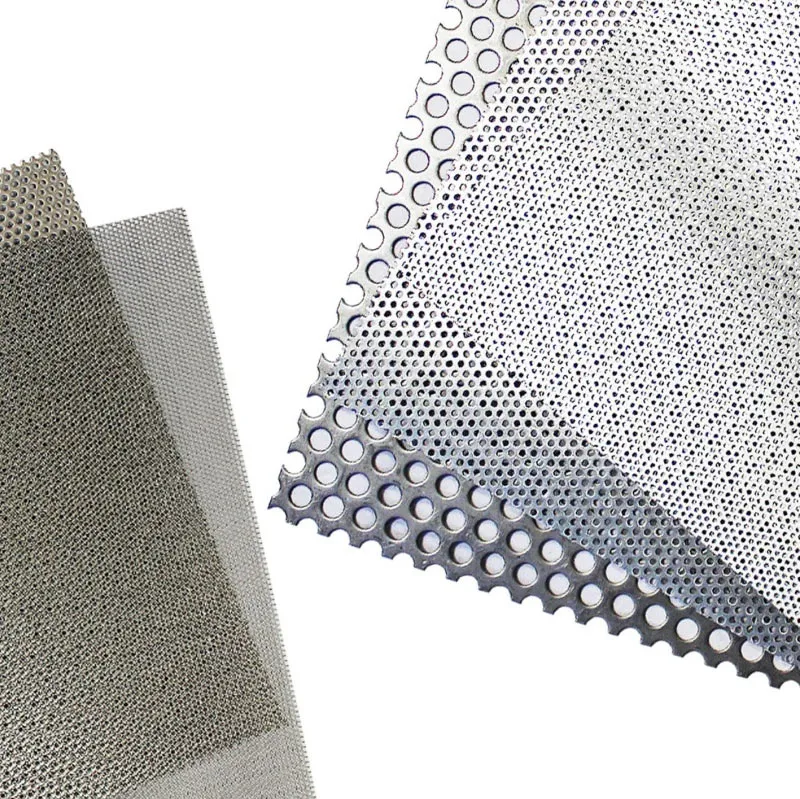
Engineered perforated metal systems designed for sound attenuation and structural durability in transportation corridors.
◆ ◆ ◆
In This Article
◆ ◆ ◆
The Mechanics of Acoustic Diffraction

Precision CNC stamping creates consistent apertures essential for predictable sound wave diffraction.
Sound attenuation in metal systems occurs through a combination of reflection and absorption. When sound waves encounter a perforated surface, a portion of the energy is reflected back to the source, while the remainder enters the apertures. If these panels are backed by absorbent mineral wool or foam, the energy is converted into heat through friction.
This process is highly dependent on the "open area" percentage. Too high a ratio allows too much sound to pass through; too low a ratio creates a reflective surface that can cause unwanted echoes or "flutter" in enclosed spaces.
—
Material Selection for Sound Attenuation
The choice of substrate is determined by the environment. Stainless steel (such as 304 grade) is preferred for coastal or industrial zones where corrosion resistance is paramount. Galvanized steel offers a cost-effective balance of strength and durability for highway applications, while aluminum provides a lightweight alternative that reduces the load on supporting structures.
Surface treatments also play a role in longevity. Powder coating and anodizing not only provide aesthetic value but protect the metal from oxidation, ensuring that the apertures do not clog or degrade over time, which would otherwise alter the acoustic profile of the installation.
In high-load industrial platforms, the combination of material thickness (up to 12mm) and high-strength alloys ensures that the barrier remains structurally sound even under significant wind loads or physical impacts.
—
Geometric Influence on Noise Reduction
The geometry of the perforation—whether round, square, hexagonal, or slotted—determines how sound waves are scattered. Round holes are standard for general-purpose filtration and sound dampening, whereas slotted or oblong holes are often used to target specific frequency ranges.
The effectiveness of a noise barrier is not merely a result of its material density, but the precise relationship between aperture diameter, hole spacing, and the depth of the air cavity behind the panel.
Customized patterns, including staggered rows or gradient arrangements, allow engineers to tune the barrier to the specific noise profile of the environment, such as the low-frequency rumble of heavy trucking versus the higher-frequency whine of subway brakes.
—
Evaluating Perforation Performance
To determine the right configuration, designers use a relative performance index based on the "Open Area" percentage. A 20% open area typically provides a strong balance between sound reflection and airflow, while a 60% open area is better suited for ventilation-heavy environments where moderate noise reduction is acceptable.
The following conceptual model illustrates how different perforation densities typically correlate with sound attenuation and structural weight.
Figure 2. Acoustic Performance vs. Open Area Ratio
—
Deployment in Transportation Facilities
In subway stations and highway corridors, the deployment of noise barriers must account for extreme vibration and air pressure changes. Perforated panels are often integrated into "silencer partitions" or anti-glare guardrails, providing a multifunctional layer that protects passengers while reducing ambient noise.
For environmental protection projects, such as garbage incinerator ventilation panels, these materials serve a dual purpose: they allow the necessary exhaust flow while preventing high-frequency operational noise from leaking into surrounding residential areas.
—
Evolution of Hybrid Acoustic Systems
The industry is moving toward hybrid systems where perforated metal is combined with organic acoustic fibers or recycled polymers. This approach addresses the limitation of metal alone—which is primarily reflective—by adding an absorbent core that traps sound energy more effectively.
Advancements in CNC stamping technology now allow for "gradient perforations," where the hole size changes across the panel. This disrupts a wider spectrum of sound frequencies, making the barrier more effective against the complex noise profiles found in modern cities.
Furthermore, the integration of aesthetic custom LOGO patterns into the acoustic panels allows municipal entities to maintain brand identity or artistic expression without compromising the technical requirements of sound mitigation.
—
Decision Matrix for Barrier Selection
Selecting the appropriate acoustic barrier requires a trade-off analysis between durability, weight, and attenuation performance. A high-density stainless steel panel will offer superior longevity and sound reflection but will increase the installation cost and the requirement for heavier support beams.
Conversely, aluminum perforated sheets are ideal for ceiling-mounted installations or areas where rapid deployment is necessary. The critical factor remains the application scenario: a highway wall requires impact resistance, while a mechanical equipment guardrail requires high airflow for cooling.
By utilizing a structured evaluation framework, engineers can match the aperture size and material to the specific environmental stressors.
| Application Scenario | Recommended Material | Ideal Open Area | Primary Technical Driver |
|---|---|---|---|
| Highway Sound Wall | Galvanized Steel | 15% - 30% | Impact Resistance |
| Subway Ventilation | Stainless Steel | 30% - 50% | Corrosion Resistance |
| Industrial Silencer | Aluminum / Steel | 20% - 40% | Frequency Tuning |
| Building Facades | Aluminum | 40% - 70% | Weight / Aesthetics |
| Equipment Chassis | Galvanized Steel | 50% - 80% | Heat Dissipation |
| Coastal Guardrails | 304 Stainless | 20% - 30% | Salt-Spray Resistance |
◆ ◆ ◆
Questions & Answers
How does perforated metal actually reduce noise?
Perforated metal works by breaking up sound waves. A portion of the sound is reflected by the solid metal surface, while the rest enters the holes. When these panels are used as the outer layer of a noise barrier with an absorbent filling (like mineral wool), the sound waves are trapped and dissipated as heat, significantly reducing the noise that passes through to the other side.
Which hole pattern is most effective for sound absorption?
There is no single "best" pattern, as it depends on the frequency of the noise. However, round holes are versatile for general use. Slotted or oblong holes can be tuned to absorb specific low-frequency sounds. The arrangement (staggered vs. straight) also affects how sound is scattered, with staggered patterns often providing more consistent attenuation across a surface.
Can these barriers be customized for specific architectural designs?
Yes. Modern CNC stamping technology allows for extreme flexibility in customization. Hole diameters (0.5mm to 50mm), plate thickness (0.3mm to 12mm), and the overall open area (10% to 80%) can be tailored. Additionally, custom patterns or brand logos can be integrated into the design to ensure the barrier blends with the surrounding urban architecture.
How do I choose between aluminum and stainless steel for a noise barrier?
The choice depends on environment and load. Stainless steel is essential for high-corrosion areas (coastal or chemical plants) and offers higher structural strength. Aluminum is preferred for interior applications, ceilings, or lightweight facades where ease of installation and weight reduction are more critical than extreme impact resistance.
What is the maintenance requirement for metal acoustic panels?
Metal barriers are generally low-maintenance. However, in high-pollution areas, dust can accumulate in the perforations, potentially altering the acoustic properties. Periodic cleaning and the use of protective coatings like powder coating or anodizing can prevent corrosion and ensure the apertures remain clear, maintaining the barrier's effectiveness over decades.
Are perforated metal barriers effective against low-frequency noise?
Low-frequency noise (like heavy engine rumble) is harder to block than high-frequency noise. While perforated metal helps, it is most effective against low frequencies when used as part of a system with a significant air gap and thick absorbent backing. The depth of the cavity behind the perforated plate is the primary factor in determining low-frequency attenuation.
◆ ◆ ◆
Final Thoughts
Effective noise mitigation in modern infrastructure requires a sophisticated balance of material science and geometric engineering. By leveraging perforated metal systems, urban planners can implement solutions that are not only acoustically efficient but also structurally durable and visually integrated.
As cities continue to grow, the demand for customizable, high-performance barriers will increase. The ability to tune aperture ratios and material grades ensures that whether the goal is highway sound reduction or industrial heat dissipation, there is a precise metal configuration capable of meeting the challenge.
Latest news
- gabion wire mesh technical specifications and performance analysis
- Barbed Wire Technical Specifications and Performance Analysis
- perforated metal sheet technical selection and performance analysis
- Razor Wire Security Perimeter Performance Analysis
- Perforated Metal Noise Barriers Performance Analysis
