Nov Back to list
Barbed Wire Technical Specifications and Performance Analysis
Securing a perimeter requires a strategic balance between cost, visibility, and physical resistance. While electronic sensors and concrete walls offer high security, they often lack the rapid deployment and cost-efficiency needed for vast agricultural lands or temporary industrial sites.
The choice of a physical barrier often comes down to the specific threat profile—whether it is preventing livestock from wandering, deterring opportunistic trespassers, or stopping professional intruders. This is where the technical specifications of high-tensile metal barriers become the deciding factor in long-term project viability.
By analyzing the structural differences between various types of barbed wire and razor wire, buyers can optimize their security budget while ensuring the longevity of their installations across diverse climates.
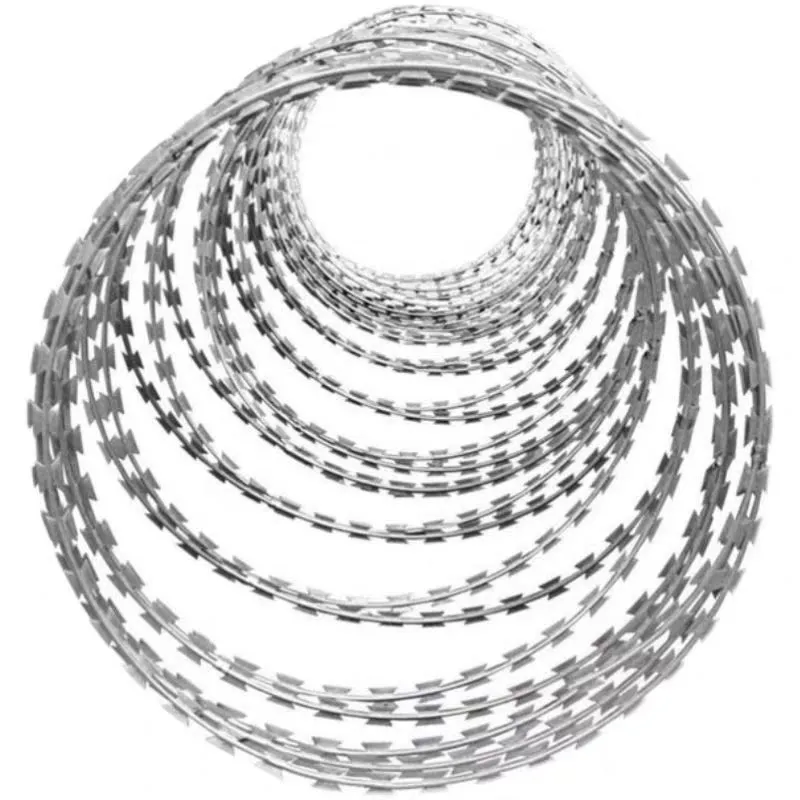
High-strength galvanized steel wire coils designed for durable outdoor fencing and livestock containment.
◆ ◆ ◆
In This Article
◆ ◆ ◆
Mechanics of Physical Deterrence

Close-up of serrated razor wire edges designed for high-intensity security.
The efficacy of any barbed system lies in its ability to create both a physical obstruction and a psychological barrier. Traditional barbed wire utilizes twisted strands and sharp spikes to cause immediate discomfort, which is generally sufficient for livestock management.
In contrast, razor wire employs a more aggressive design, utilizing punched steel plates with serrated edges. This transition from "pricking" to "cutting" significantly increases the risk for intruders, making it the preferred choice for high-security zones like borders and correctional facilities.
—
Material Science in Wire Fabrication
The structural integrity of a fence begins with the base metal. Low carbon steel wire is often used for temporary or budget-sensitive projects where high tensile strength is not the primary concern. However, for permanent installations, hot-dip galvanized steel is the industry standard due to its balance of mechanical strength and rust protection.
High-tensile core wires, often reaching strengths of 1200MPa to 1600MPa, are critical for maintaining fence tension over long distances. This reduces the number of required support posts and prevents the fence from sagging under environmental stress or physical pressure.
For extremely corrosive environments—such as coastal regions or chemical processing plants—stainless steel (304/316) is utilized. While the initial investment is higher, the elimination of oxidative failure extends the service life by decades, significantly lowering the total cost of ownership.
—
Assessing Anti-Climbing Capabilities
Evaluation of security fencing must go beyond simple material strength; it must consider the "time-to-breach." Traditional barbed wire is relatively easy to bypass with basic tools or thick clothing. Razor wire, however, is designed to snag clothing and skin, creating a complex web that is difficult to cut without specialized equipment.
The deterrence factor of a security barrier is a product of visual warning and physical risk. Razor wire's reflective surfaces and dense blade pitch create a psychological "no-go" zone that prevents the attempt before it begins.
Different configurations, such as BTO-22 or CBT-65, offer varying levels of protection. Shorter blade lengths and tighter pitches generally provide higher deterrence for human intruders, whereas wider spacings may be more appropriate for animal containment where extreme injury must be avoided.
—
Performance Index by Security Level
When comparing different barrier types, it is helpful to look at relative performance indices. Factors such as tensile strength, corrosion resistance, and deterrence level vary significantly between mild steel, galvanized steel, and stainless steel options.
For instance, a typical agricultural fence prioritizes cost and ease of installation, whereas a military-grade perimeter prioritizes absolute breach resistance. This qualitative assessment helps procurement officers align product specifications with their actual risk profile.
Figure 2. Relative Performance Comparison of Fencing Materials
—
Application Scenarios and Requirements
Agricultural applications typically require traditional double-strand galvanized wire. For cattle, moderate barb spacing is used to prevent escape while minimizing unnecessary livestock injury. In contrast, pig containment often requires closer spacing and higher corrosion resistance to withstand muddy, high-moisture environments.
Industrial and government sites often utilize a hybrid approach. A welded mesh or chain-link fence provides the primary structure, while razor wire is installed atop the fence using V-shaped or Y-shaped brackets. This creates a multi-layered defense system that is significantly harder to penetrate than a single-wire solution.
—
Corrosion Resistance and Lifecycle Costs
The biggest threat to the longevity of metal fencing is oxidation. Hot-dip galvanization creates a zinc-iron alloy layer that protects the inner steel core. Depending on the coating thickness (e.g., 120g/m² vs 245g/m²), the time until first-rust occurs can vary by several years.
PVC or PE coatings add an extra layer of insulation, which is particularly effective in salt-spray environments like seaside resorts or chemical plants. These coatings not only prevent rust but also reduce the "sharpness" for animal husbandry applications where safety is a concern.
When calculating costs, buyers should look beyond the price per roll. A cheaper, low-zinc wire may require replacement every 3-5 years, whereas a high-zinc or stainless steel option may last 20 years. The labor cost of re-installation often exceeds the initial material savings.
—
Selection Framework for Global Procurement
Selecting the right supplier involves verifying the technical capabilities of the production line. High-quality manufacturing ensures consistent barb spacing and uniform galvanization, which prevents weak points where the wire could snap under tension.
For international distributors, packaging and logistics are critical. Roll weights and coil diameters must be optimized for container loading to minimize shipping costs. Customization options, such as private labeling or specific tensile strength requirements, allow distributors to better serve local market needs.
As a professional manufacturer, Jinzehong provides customized solutions based on specific environmental conditions and security requirements, ensuring that the chosen barbed wire configuration matches the actual risk level of the project.
| Environment Type | Recommended Material | Key Technical Factor | Relative Lifespan |
|---|---|---|---|
| Dry Rural / Farm | Galvanized Steel | Zinc Coating Weight | Medium |
| High Humidity / Mud | PVC Coated Steel | Polymer Thickness | Medium-High |
| Coastal / Salt Spray | Stainless Steel 316 | Chromium/Moly Content | Very High |
| Temporary Construction | Mild Steel | Initial Cost | Low |
| Max Security Border | Razor Wire (Galv) | Blade Sharpness/Pitch | High |
| Chemical Plant | Stainless Steel 304 | Acid Resistance | High |
◆ ◆ ◆
Questions & Answers
What is the primary difference between traditional barbed wire and razor wire?
Traditional barbed wire uses twisted wires with sharp spikes (barbs) at intervals, primarily designed to deter livestock and provide basic boundary marking. Razor wire uses specially punched steel strips with serrated, blade-like edges. While barbed wire causes pricking and discomfort, razor wire is designed to cut and snag, providing a significantly higher level of anti-climbing and anti-intrusion security for high-risk areas.
How do I choose between galvanized and stainless steel for outdoor use?
The decision depends on the environmental salinity and moisture. Hot-dip galvanized steel is the most cost-effective choice for most rural and industrial environments. However, in coastal areas or chemical plants where salt spray and acid rain are prevalent, galvanized layers can break down. In these cases, stainless steel (304 or 316) is recommended because it forms a natural oxide layer that prevents corrosion without the need for an external coating.
What does "tensile strength" mean in the context of fencing wire?
Tensile strength refers to the maximum amount of longitudinal stress a wire can withstand before breaking. High-tensile wires (e.g., 1200MPa or higher) can be stretched tighter across longer spans without sagging. This is crucial for large-scale perimeter security because it requires fewer support posts and makes the fence much harder to pull down or cut through, increasing the overall physical resistance of the barrier.
Are PVC coatings beneficial for all types of barbed wire?
PVC coatings provide two main benefits: enhanced corrosion resistance and reduced aggression. In chemical environments, the plastic layer acts as a primary barrier against corrosives. In animal husbandry, it prevents the wire from being too sharp, reducing the risk of severe injury to livestock. However, for high-security razor wire, PVC is rarely used as it can dull the cutting edges and make the barrier easier to handle for intruders.
How should I evaluate the total cost of a fencing project?
Avoid focusing solely on the unit price per roll. The total cost of ownership (TCO) includes the initial material cost, installation labor, and long-term maintenance. For example, choosing a lower-grade galvanized wire may save 20% upfront but lead to rust failure in 3 years, necessitating a full re-installation. Investing in higher zinc coatings or stainless steel often reduces the TCO by extending the replacement cycle from a few years to several decades.
Can barbed wire be installed on existing walls or fences?
Yes, this is a common security upgrade. Using mounting brackets (V-shaped or Y-shaped), razor wire or barbed strands can be added to the top of existing masonry walls, chain-link fences, or welded mesh. This creates a "top-of-fence" deterrent that increases the effective height of the barrier and prevents climbing without requiring the demolition and replacement of the entire existing structure.
◆ ◆ ◆
Final Thoughts
Effective perimeter security is not about choosing the most expensive material, but about matching the technical specifications of the wire to the environmental and security risks of the site. From high-tensile galvanized steel for vast pastures to stainless steel razor wire for critical infrastructure, the material choice dictates the lifecycle and reliability of the barrier.
By prioritizing tensile strength, corrosion resistance, and the correct barb or blade configuration, project managers can build defenses that are both cost-efficient and genuinely deterrent. Working with experienced manufacturers ensures that these technical requirements are met consistently across every roll.
Latest news
- gabion wire mesh technical specifications and performance analysis
- Barbed Wire Technical Specifications and Performance Analysis
- perforated metal sheet technical selection and performance analysis
- Razor Wire Security Perimeter Performance Analysis
- Perforated Metal Noise Barriers Performance Analysis
