Oct Back to list
Expanded Metal Mesh Industrial Thermal Performance Analysis
When processing high-moisture food or sensitive medicinal materials, the bottleneck is rarely the heat source, but the airflow. Solid trays often create "dead zones" where moisture traps against the product, leading to uneven drying and quality degradation.
Industrial dehydration and baking demand a surface that provides structural support without obstructing thermal convection. This is where specialized metal mesh structures transition from simple containers to active components of the drying process.
By analyzing the interplay between material science and airflow dynamics, operators can optimize throughput. Exploring the technical application of expanded metal mesh and woven structures reveals how precision customization directly impacts finished product consistency.
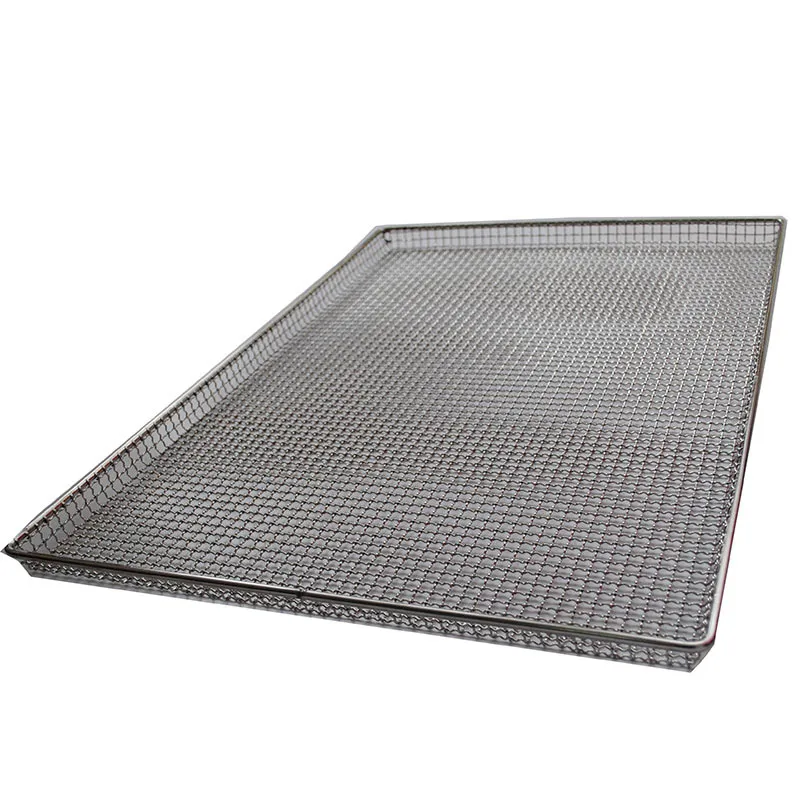
High-precision expanded metal mesh configurations optimized for uniform thermal distribution in industrial ovens.
◆ ◆ ◆
In This Article
◆ ◆ ◆
The Mechanics of Open-Structure Trays
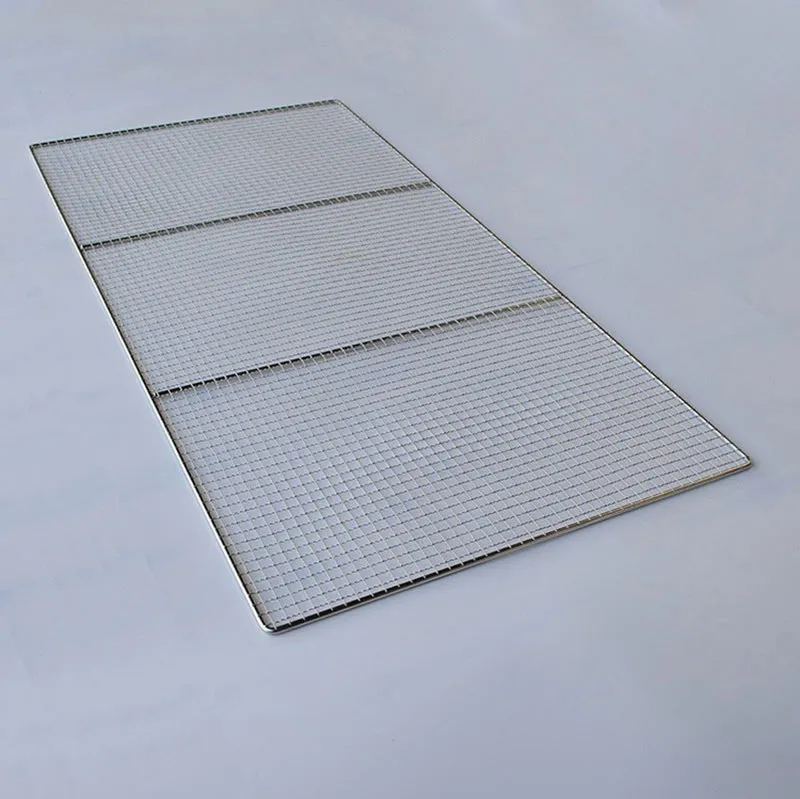
Close-up of reinforced mesh edges ensuring structural integrity under heavy loads.
Unlike stamped perforated sheets, expanded metal mesh is created by slitting and stretching the material, resulting in a continuous, monolithic structure. This absence of welds or seams in the mesh body reduces potential contamination points, which is critical for food-grade applications.
The geometric "diamond" shape of the openings provides a natural rigidity that resists sagging, even when subjected to high-temperature cycles. This structural stability ensures that the distance between stacked trays remains constant, preventing airflow blockages in multi-layer drying cabinets.
—
Material Selection for Thermal Stability
The chemical environment of a drying chamber—often characterized by high humidity and acidic or alkaline byproduct release—dictates the alloy choice. Stainless Steel 304 is the standard for general bakery use, providing sufficient corrosion resistance for sugar and starch-based products. However, when processing salted meats or using aggressive sterilization chemicals, 316 stainless steel is necessary due to its molybdenum content, which prevents pitting corrosion.
For high-frequency baking where weight is a concern for manual handling, anodized aluminum alloys offer a 30% weight reduction. The anodic oxide layer provides a hard, non-reactive surface that resists staining and oxidation, although it lacks the extreme temperature ceiling of stainless steel (which can withstand up to 800°C).
Surface treatment is the final layer of defense. Electropolishing is often employed to remove microscopic burrs, eliminating "sanitary dead corners" where organic residue could accumulate. This ensures that the tray is not only durable but meets stringent FDA and hygiene standards for direct food contact.
—
Airflow Dynamics and Aperture Logic
Designing a mesh tray requires a delicate balance between "open area" and "load-bearing capacity." An aperture that is too large may allow small product pieces to fall through, while one that is too small restricts the vertical movement of hot air, effectively turning the mesh tray into a solid plate.
Optimal drying efficiency is achieved when the mesh aperture (typically 2-5mm) allows for 60-80% open area, ensuring that the underside of the product receives the same thermal energy as the top surface.
This uniform heat circulation prevents the "wet bottom" phenomenon common in solid trays. By facilitating 360-degree air contact, the dehydration rate becomes linear across the entire batch, significantly reducing the total cycle time and preventing the need for manual product flipping.
—
Efficiency Metrics: Mesh vs. Solid Surfaces
The performance gap between mesh and solid trays is most evident in moisture evacuation rates. In a controlled drying environment, mesh trays accelerate the removal of water vapor from the product's lower boundary layer, which is the primary bottleneck in convection drying.
When evaluating the relative suitability of different tray types, we look at the "Thermal Exchange Index." This conceptual framework measures how effectively a surface allows heat to reach the product while allowing moisture to escape without condensing on the tray surface.
Figure 2. Relative Efficiency Index by Tray Design
—
Operational Scenarios in Food and Pharma
In commercial bakeries, the use of mesh trays for cooling biscuits and pizza prevents the base from becoming soggy due to trapped steam. For meat processing, such as sausage air-drying, the high load-bearing capacity of reinforced stainless steel mesh is essential to prevent tray deformation under the weight of dense proteins.
The pharmaceutical sector presents a different challenge: preventing metal contamination. Low-temperature air drying of herbal teas and medicinal materials requires trays with electrolytic polishing and certified 316L stainless steel to ensure no heavy metal precipitation occurs during the dehydration process.
—
Evolution of Customization Standards
Customization has evolved from simple dimension adjustments to integrated equipment matching. Modern trays now incorporate foldable frames for space-saving storage and specific attachment points—such as slides or hooks—to integrate seamlessly with automated conveyor belts in industrial drying lines.
The integration of non-stick technologies has also become a priority. Optional PTFE (Teflon) coatings or silicone pads are now specified for sticky products, reducing demolding loss and ensuring that the structural advantages of the mesh are not offset by product adhesion.
As indicated by the capabilities at Jinzehong, the trend is moving toward "equipment-centric" design. This means the tray is no longer a generic accessory but is engineered based on the oven's internal air velocity and the specific heat-map of the drying chamber.
—
Selection Framework for Industrial Buyers
When migrating from solid trays to mesh systems, buyers must evaluate the trade-off between airflow and support. A common mistake is selecting a mesh that is too fine for the product weight, leading to permanent deformation, or too coarse, resulting in product loss.
The decision matrix should start with the chemical nature of the product (corrosiveness), followed by the temperature requirements and the physical dimensions of the processing equipment. Material certification, such as FDA compliance for food contact, should be a non-negotiable baseline.
Ultimately, the cost-benefit analysis should not be based on the initial price of the tray, but on the reduction in drying time and the improvement in batch consistency.
| Application Scenario | Recommended Material | Critical Parameter | Primary Suitability |
|---|---|---|---|
| Standard Bakery | SS 304 | 2-4mm Aperture | High |
| Salted Meat Drying | SS 316 | Reinforced Frame | Essential |
| Medicinal Herbs | SS 316L / Electropolished | Fine Mesh / No Burrs | High |
| Light-weight Baking | Anodized Aluminum | Weight Reduction | Moderate |
| Industrial Conveyors | SS 304 / 316 | Slide/Hook Integration | High |
| Sticky Fruit Slices | PTFE Coated Mesh | Non-stick Surface | Essential |
◆ ◆ ◆
Questions & Answers
What defines a "custom" wire mesh tray for industrial use?
A custom tray is engineered beyond standard dimensions. It involves specifying the exact wire diameter and aperture size to balance airflow with load-bearing needs, selecting materials (like SS 304 vs 316) based on the chemical environment, and adding equipment-specific features such as foldable frames, reinforced edges, or specialized handles to fit existing oven racks or conveyor systems.
How do I choose between 304 and 316 stainless steel for drying trays?
Grade 304 is suitable for most general food processing and baking environments where exposure is limited to standard cleaning and moderate temperatures. Grade 316 is required for high-salinity environments (e.g., cured meats) or where aggressive chemical cleaners are used, as the addition of molybdenum provides superior resistance to pitting and chloride-induced corrosion.
Can mesh trays actually reduce the energy cost of a drying cycle?
Yes. By increasing the available surface area for heat exchange and allowing moisture to escape from the bottom of the product, mesh trays reduce the time required to reach the target moisture content. Shorter cycle times directly translate to lower energy consumption per batch and increased total throughput for the facility.
What are the risks of using an incorrect aperture size?
If the aperture is too large, small pieces of product may fall through, leading to waste and potential contamination of the oven floor. If the aperture is too small, the tray acts as a barrier to airflow, creating localized humidity zones and resulting in uneven drying (the "wet bottom" effect), which compromises the quality of the final product.
Are these trays compatible with industrial sterilization processes?
High-grade stainless steel mesh trays (especially 316L) are designed for extreme environments. They can withstand autoclave sterilization, high-pressure steam, and industrial dishwasher cycles without oxidizing or losing structural integrity, making them ideal for pharmaceutical and medical-grade drying applications.
How does the "expanded" mesh differ from "woven" mesh in terms of performance?
Expanded metal is slit and stretched from a single sheet, creating a monolithic structure with no welds, which is generally more rigid and has fewer contamination points. Woven mesh is made from intersecting wires and can achieve much finer apertures, but may be more prone to sagging under heavy loads if not properly supported by a frame.
◆ ◆ ◆
Final Thoughts
The transition from traditional solid trays to high-performance metal mesh systems is a strategic move toward process precision. By treating the tray as a technical component—optimizing for material chemistry, aperture logic, and equipment integration—manufacturers can solve persistent issues of uneven drying and product degradation.
Whether utilizing SS 304 for standard baking or 316L for pharmaceutical rigor, the goal remains the same: maximizing the efficiency of thermal convection. When these technical variables are aligned with the operational needs of the facility, the result is a more sustainable, consistent, and higher-quality production line.
Latest news
