Oct Back to list
Modular Defensive Barrier Stainless Steel Wire Mesh Performance Analysis
Selecting a protective barrier for high-risk environments often comes down to a critical balance between deployment speed and structural integrity. In sectors where explosion hazards or sudden floods pose an immediate threat, the transition from traditional sandbagging to modular reinforced systems has redefined site safety protocols.
These modern defensive structures rely on a sophisticated combination of high-strength steel frames and industrial geotextiles. The ability to rapidly scale a perimeter using pre-engineered units allows for an immediate response to security breaches or natural disasters, reducing the window of vulnerability for personnel and assets.
Understanding the technical interplay between the frame and the stainless steel wire mesh components is essential for engineers and procurement officers tasked with maintaining rigorous safety standards.
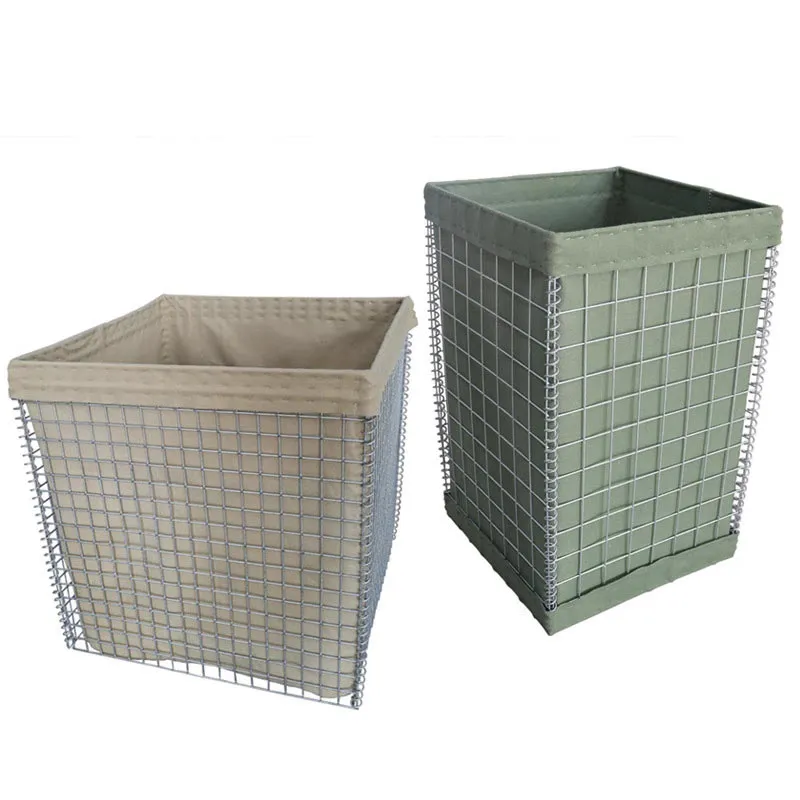
An overview of the modular defensive barrier system designed for rapid deployment in hazardous zones.
◆ ◆ ◆
In This Article
◆ ◆ ◆
Evolution of Modular Protective Barriers
Precision welding of steel frames used in defensive modular units.
For decades, the primary method for rapid fortification was the manual filling of sandbags. While effective, this process was labor-intensive and structurally inconsistent. The emergence of the defensive barrier, or Hesco-style system, shifted the paradigm by utilizing a modular metal frame that acts as a skeleton for high-strength geotextiles.
This evolution allowed for the creation of massive, rigid walls in a fraction of the time. By integrating heavy-duty steel and stainless steel wire mesh, these systems can now withstand significant blast pressures and hydraulic forces, moving beyond simple perimeter marking to active life-saving containment.
—
Engineering Logic of Explosion-Proof Cages
The primary objective of an explosion-proof cage is not necessarily to stop an explosion entirely, but to manage the energy release. This is achieved through a physical containment strategy where the reinforced metal enclosure isolates hazardous materials or protects sensitive equipment from external debris. The design focuses on dispersing the shockwave through the mesh structure while preventing the fragmentation of the container itself.
Key design variables include the mesh aperture size and the gauge of the steel wire. A tighter weave increases the containment of smaller fragments but may alter the ventilation properties required for hazardous gases. Consequently, the engineering of these cages requires a precise calculation of the expected pressure loads against the tensile strength of the welding points.
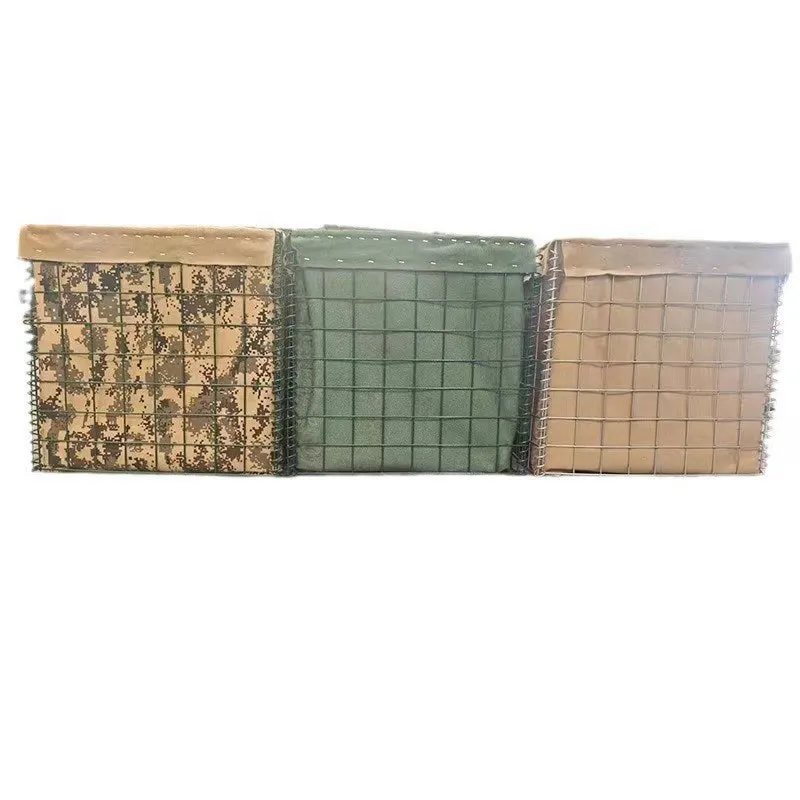
Deployment flexibility is another core engineering pillar. By using modular units like the Epc series, facilities can customize the height and length of their barriers based on the specific spatial constraints of a chemical plant or a military outpost, ensuring that there are no structural gaps in the defensive line.
—
Material Synergy and Structural Durability
The longevity of a defensive barrier depends heavily on its resistance to environmental degradation. Since these systems are often deployed in saline coastal areas or caustic industrial zones, the choice of surface treatment is as important as the base metal. Galvanizing and powder coating are standard, but for extreme environments, stainless steel components are utilized to prevent oxidative failure.
The structural integrity of a defensive barrier is a result of the synergy between the rigid metal frame and the high-strength geotextile, which together transform loose fill material into a monolithic, shock-absorbing mass.
When these materials are combined, the geotextile prevents the fill (sand, gravel, or soil) from leaching through the mesh, while the steel frame prevents the geotextile from bulging or rupturing under pressure. This symbiotic relationship ensures that the barrier maintains its geometric shape even under significant lateral stress.
—
Performance Metrics by Deployment Scale
Different modular models serve distinct strategic purposes. For instance, a compact unit like the Epc2 (0.61M height) is ideal for targeted equipment protection, whereas larger units like the Epc12 (2.13M height) are designed for primary perimeter defense. The effectiveness of these units is often measured by their "containment efficiency" relative to the volume of fill material.
As the scale of the unit increases, the structural requirements for the frame linkages become more stringent to prevent buckling. The following index illustrates the relative suitability of different modular sizes across various safety requirements.
Figure 2. Relative Suitability Index of Barrier Models
—
Critical Operational Application Scenarios
In oil and gas facilities, these cages are routinely deployed around battery storage areas and valve manifolds to mitigate the risk of cascading failures. In such settings, the primary concern is not only physical impact but the ability of the mesh to allow for necessary airflow to prevent the buildup of flammable vapors.
Beyond industrial use, the modular nature of these barriers makes them indispensable for disaster relief. During flash flood events, the rapid deployment of Epc series units can create a temporary levee system that is significantly more stable than traditional sandbags, as the interlocking frames prevent the "sliding" effect common in loose-bag installations.
—
Future Directions in High-Strength Containment
The next generation of protective barriers is moving toward "smart containment." This involves integrating sensors into the steel frames to monitor structural stress in real-time, allowing facility managers to detect degradation before a failure occurs. The integration of advanced alloys is also reducing the overall weight of the frames without sacrificing tensile strength.
Sustainability is also becoming a factor in material selection. The industry is exploring recyclable geotextiles and low-emission galvanizing processes to reduce the environmental footprint of large-scale fortifications. This shift is particularly relevant for temporary military installations that must be decommissioned and removed without leaving long-term soil contamination.
Furthermore, the customization of mesh patterns is becoming more data-driven. By simulating blast waves using computational fluid dynamics (CFD), manufacturers can now optimize the aperture size of the wire mesh to maximize energy dissipation for specific types of explosive materials.
—
Comparative Selection Framework for Barriers
Choosing the correct barrier requires a trade-off analysis between cost, deployment time, and the level of protection required. While a stainless steel reinforced unit offers the highest corrosion resistance, it may be over-engineered for temporary low-risk sites.
Decision-makers should evaluate the environment first—considering humidity, chemical exposure, and the potential nature of the threat. A barrier intended for flood control requires different fill material and geotextile porosity than one intended for blast containment.
The following framework provides a relative assessment of different barrier configurations based on typical industrial requirements.
| Requirement | Standard Steel | Galvanized Mesh | Stainless Steel | Custom Alloy |
|---|---|---|---|---|
| Corrosion Resistance | Low | Medium | High | Very High |
| Deployment Speed | Fast | Fast | Moderate | Moderate |
| Blast Containment | Moderate | Moderate | High | Very High |
| Life Cycle Cost | Low | Medium | High | Very High |
| Environmental Fit | Dry Zone | Industrial | Marine/Chemical | Extreme/Arctic |
| Structural Rigidity | Standard | Standard | Reinforced | Maximum |
◆ ◆ ◆
Questions & Answers
What constitutes an explosion-proof cage?
An explosion-proof cage is a reinforced metal enclosure engineered to shield personnel and equipment from blast effects or to contain hazardous materials. These structures typically employ a high-strength steel or stainless steel frame combined with durable mesh to isolate danger zones and reduce the risk of structural collapse during an incident.
Which materials are most effective for harsh environments?
For environments with high salinity or chemical exposure, stainless steel is the preferred choice due to its innate corrosion resistance. When combined with galvanizing or specialized powder coatings, these materials ensure that the structural integrity of the mesh and welding points remains intact over long periods of exposure.
How do modular barriers compare to traditional sandbags?
Modular barriers are significantly faster to deploy and offer superior structural stability. While sandbags can shift or collapse under pressure, the internal metal frame of a modular unit provides a rigid skeleton that locks the fill material in place, creating a cohesive wall that can withstand greater lateral forces.
Can these defensive systems be customized for specific site needs?
Yes, customization is standard. Variations can be made in the overall dimensions (height/width/length), the specific mesh pattern for ventilation or containment, and the addition of locking mechanisms or mounting systems to integrate the barriers into existing facility infrastructure.
What are the primary industries using these containment systems?
These systems are widely utilized in chemical processing plants, oil and gas refineries, mining operations, and military defense. They are also critical in public safety for flood prevention and temporary disaster relief fortifications where rapid containment of water or debris is necessary.
How does the mesh structure enhance safety during a failure?
The mesh acts as a physical filter that contains heavy fragmentation while allowing the pressure wave to pass through in a controlled manner. By preventing the "projectile" effect of debris, it significantly reduces the risk of injury to personnel in the surrounding safety zone.
◆ ◆ ◆
Final Thoughts
The transition toward modular, high-strength defensive barriers represents a critical advancement in industrial and military safety. By leveraging the structural properties of stainless steel wire mesh and engineered geotextiles, organizations can now implement protection systems that are both rapidly deployable and structurally resilient.
Ultimately, the effectiveness of these systems depends on a precise match between the modular model and the specific threat environment. As containment technology continues to evolve, the integration of smarter materials and data-driven design will further refine the balance between operational efficiency and human safety.
