Oct Back to list
Wire Mesh Engineering Performance Analysis
Precision filtration and structural separation often depend on a single critical variable: the consistency of the weave. When dealing with aggressive chemical environments or extreme thermal fluctuations, the choice of material and aperture precision determines whether a system maintains operational integrity or suffers catastrophic failure.
Modern industrial requirements have shifted from simple "mesh" solutions to engineered textile metalwork. This evolution is driven by the need for tighter tolerances in pharmaceutical processing, higher corrosion resistance in marine engineering, and sustainable material cycles in food production.
Understanding the technical interplay between wire diameter, mesh count, and material grade is essential for optimizing flow rates and filtration efficiency. This guide examines the engineering logic behind high-performance wire mesh and how to evaluate these materials for specific industrial demands.
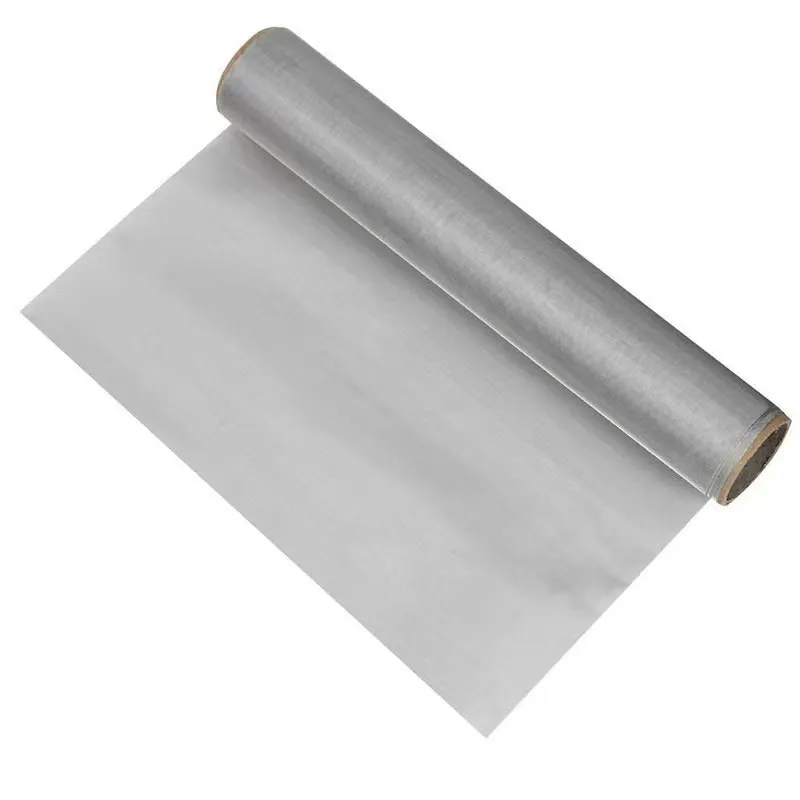
Precision-woven stainless steel mesh showing uniform aperture distribution for industrial screening.}
◆ ◆ ◆
In This Article
◆ ◆ ◆
Material Fundamentals of Woven Mesh
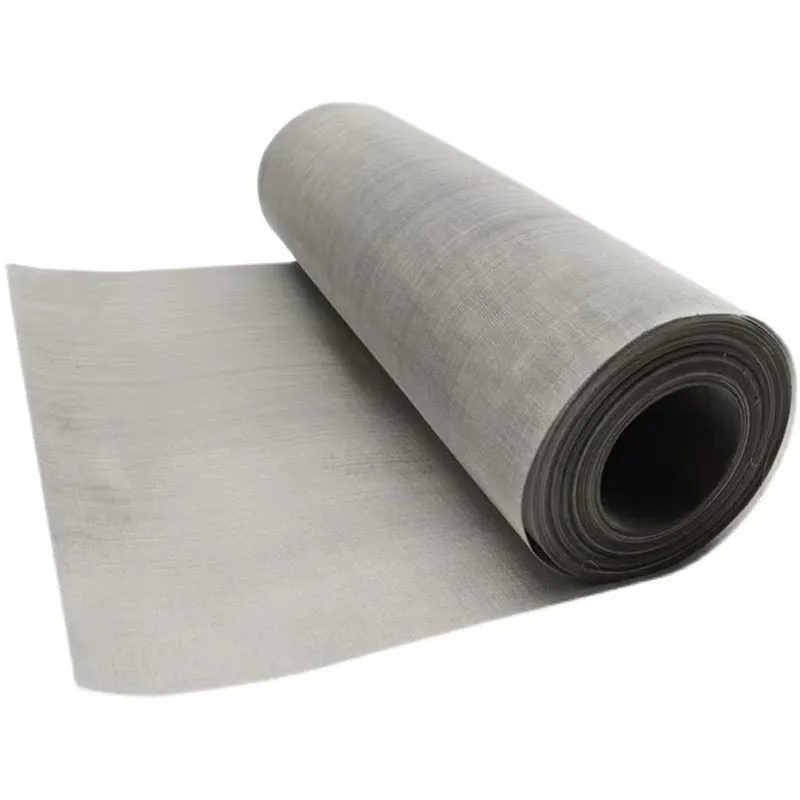
Detail of high-precision weaving used in pharmaceutical-grade filter mesh.}
The performance of woven mesh is fundamentally tied to the alloy composition of the wire. Stainless steel grades such as 304, 316, and 316L are industry standards because they offer a balanced ratio of chromium and nickel, creating a passive oxide layer that prevents oxidation.
For the most demanding environments, 316L is often preferred due to its low carbon content, which minimizes carbide precipitation during welding or high-temperature exposure, thereby maintaining superior corrosion resistance in chloride-rich environments.
—
Engineering the Weave: Technical Factors
The geometry of a mesh is defined by the "Mesh Count"—the number of openings per linear inch. This value, combined with the wire diameter, determines the aperture width and the open screening area. A higher mesh count typically results in finer filtration but increases the pressure drop across the medium, necessitating a careful balance between flow rate and particle retention.
Weave patterns further influence structural rigidity. Plain weave offers the highest stability and most uniform apertures, whereas twill and Dutch weaves provide denser packing. Dutch weave, in particular, is engineered for high-precision liquid filtration, utilizing different wire diameters for warp and weft to create a depth-filtration effect.
Precision machinery ensures that tension is uniform across the entire roll. Inconsistent tension leads to "aperture drift," where the holes vary in size, compromising the filtration grade. Quality manufacturing focuses on maintaining this dimensional stability to ensure that the specified micron rating is consistent throughout the product.
—
Thermal and Chemical Stability Analysis
Operating temperature ranges significantly impact the mechanical properties of metal mesh. While standard plastics deform at relatively low temperatures, stainless steel woven structures maintain their shape across a vast spectrum, typically from -200°C to 800°C. This makes them indispensable for cryogenic applications and high-heat furnace filtration.
The critical failure point for most mesh systems is not thermal deformation, but chemical corrosion. The interaction between the alloy and the processing medium (acid, alkali, or salt spray) determines the actual service life and maintenance intervals.
Beyond thermal limits, non-toxicity is a primary requirement in food-grade and pharmaceutical sectors. Compliance with standards such as FDA ensures that the mesh does not leach metallic contaminants into the product stream, provided that the surface is smooth and easy to rinse, preventing the buildup of organic residues.
—
Performance Metrics Across Mesh Counts
The relationship between mesh density and performance is non-linear. As the mesh count increases, the "Open Area" percentage decreases, which significantly affects the permeability of the filter. For coarse mesh, the primary goal is structural strength and large particle separation; for fine mesh, the priority shifts to precision and the prevention of microscopic breakthrough.
Evaluating these metrics allows engineers to predict the "clogging rate" of a filter. A mesh that is too fine may lead to frequent downtime for cleaning, while a mesh that is too coarse may allow contaminants to damage downstream equipment.
Figure 2. Relative Suitability Index by Mesh Density
—
Operational Scenarios and Use Cases
In a typical industrial setting, such as a petrochemical refinery, mesh is utilized in centrifugal separators to remove slag from liquid streams. Here, high tensile strength is paramount to resist the forces of rotation. Conversely, in architectural applications, woven mesh is used for facade ventilation, where the aesthetic quality of the weave and its ability to diffuse sunlight are the primary drivers.
Another critical application is pest control in food warehouses. Using stainless steel woven mesh for mice control provides a permanent barrier that rodents cannot chew through, unlike plastic or aluminum alternatives. The precision of the aperture ensures that while air continues to circulate for ventilation, pests are effectively excluded.
—
Future Trends in Metal Filtration
The industry is moving toward "hybrid filtration" systems, where woven mesh is combined with sintered metal fibers to create multi-stage filters. This allows for the capture of a wider range of particle sizes within a single component, reducing the overall footprint of filtration systems.
There is also an increasing demand for customized alloys. While 316L is the standard, specialized coatings—such as PTFE or polymer impregnation—are being applied to the wire to reduce surface tension and prevent "blinding" (where particles stick to the mesh), thereby extending the time between cleaning cycles.
Sustainability is another driving factor. Companies are focusing on the recyclability of high-grade stainless steel and the development of production methods that reduce wire waste during the weaving process, aligning industrial production with global environmental standards.
—
Selection Framework for Buyers
Selecting the correct mesh requires a systematic evaluation of the operational environment. A buyer must first define the target particle size and the required flow rate, then cross-reference these with the chemical properties of the fluid or gas being processed.
Common errors in selection include over-specifying the mesh count, which leads to excessive pressure drops, or under-specifying the material grade, which results in premature corrosion. A balanced approach considers the trade-off between initial procurement cost and the total cost of ownership, including maintenance and downtime.
Professional suppliers, such as Anping County Jinzehong Wire Mesh Products Co., Ltd., provide detailed technical data sheets that correlate wire diameter and aperture width. Using this data, engineers can model the performance of the mesh before installation, ensuring the product meets the exact requirements of the application.
| Primary Requirement | Recommended Weave | Material Grade | Critical Parameter |
|---|---|---|---|
| Fine Liquid Filtration | Dutch Weave | SS 316L | Aperture Precision |
| High-Heat Screening | Plain Weave | SS 304/316 | Thermal Stability |
| Pest/Rodent Control | Plain Weave | SS 304 | Wire Tensile Strength |
| Architectural Facades | Decorative Weave | SS 304 | Visual Uniformity |
| Food Processing | Plain Weave | SS 316L (FDA) | Surface Smoothness |
| Chemical Separation | Twill Weave | SS 316L | Corrosion Resistance |
◆ ◆ ◆
Questions & Answers
How is the "mesh count" of a woven wire mesh determined?
Mesh count refers to the number of openings (holes) per linear inch of the material. For example, a 100-mesh screen has 100 openings per inch. It is important to note that mesh count is not a direct measurement of the hole size; the actual aperture width depends on the combination of the mesh count and the thickness (diameter) of the wire used in the weave.
What is the practical difference between SS 304 and SS 316 for mesh applications?
SS 304 is a versatile, cost-effective grade suitable for general purposes and moderate corrosion environments. SS 316 contains molybdenum, which significantly enhances its resistance to chlorides and sulfuric acids. For marine applications, chemical processing, or medical-grade equipment, SS 316 or 316L is the required standard to prevent pitting and crevice corrosion.
Can woven wire mesh be customized for non-standard apertures?
Yes. Professional manufacturers can customize both the wire diameter and the weaving pattern to achieve specific aperture widths. This customization is critical for industries like pharmaceutical powder sieving, where the exact micron size of the opening determines the quality of the final product. Customization options typically include roll formats, panels, or pre-fabricated filter discs.
How do I prevent "blinding" or clogging in fine mesh filters?
Blinding occurs when particles become lodged in the mesh openings. This can be mitigated by selecting a weave with a higher open area or by applying a hydrophobic coating to the wire. Additionally, implementing a regular back-flush cleaning cycle or using ultrasonic cleaning can restore the mesh's original permeability and extend its operational life.
Is woven mesh suitable for extreme temperature environments?
Yes, stainless steel woven mesh is highly stable across a wide temperature range. It can maintain structural integrity from cryogenic temperatures (-200°C) up to approximately 800°C, depending on the specific alloy. This thermal resilience makes it superior to polymer-based filters in industrial furnaces, exhaust systems, and specialized aerospace components.
What is the most effective way to evaluate mesh quality during procurement?
Quality should be evaluated based on aperture uniformity and the absence of "snags" or broken wires. Using a digital microscope to verify the open area percentage and conducting a tensile test on a sample piece can confirm the mesh's strength. Always request a material certificate (Mill Test Report) to ensure the stainless steel grade matches the technical specifications.
◆ ◆ ◆
Final Thoughts
The selection of a woven wire mesh is an engineering decision that impacts the efficiency, safety, and longevity of an industrial system. By prioritizing the relationship between material grade, weave geometry, and operational stress, users can avoid the common pitfalls of premature failure and excessive maintenance.
As manufacturing techniques continue to refine the precision of metal weaving, the boundary between simple screening and high-tech filtration continues to blur. Investing in a technically sound, high-precision mesh is no longer just about separation—it is about optimizing the entire production pipeline for reliability and performance.
Latest news
