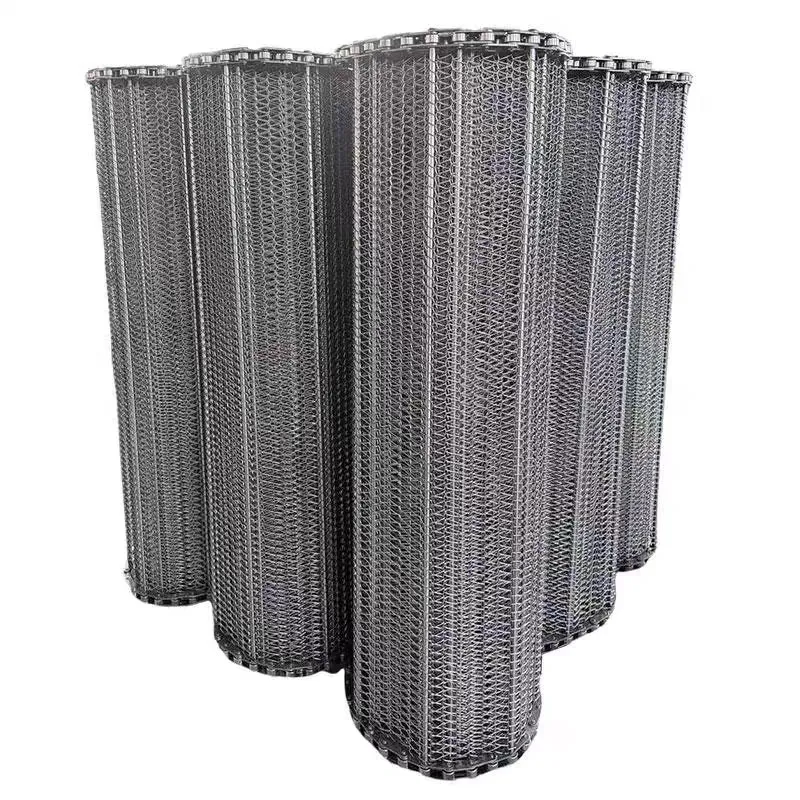

Metal Conveyor Belt
Metal conveyor belt material in galvanized iron, iron, or stainless steel (201/304), with customized special materials available. Sizes are made to your specifications; loading capacity is 1–2000 kg/m², with chain pitch from 12.7 to 76.2 mm. Operating temperatures range from -196°C to 1100°C.
Product Description
Metal conveyor belts are industrial-grade conveying systems built from high-performance metal materials. Engineered for durability, heat resistance, and corrosion resistance, they are well suited for continuous operation across industries such as food processing, pharmaceuticals, automotive manufacturing, electronics, and logistics. Their modular design and configurable setups enable adaptation to a wide range of production environments.
Product Structure & Materials
1. Material Options
Stainless Steel: Grades 304/316 (food-safe, acid/alkali resistant), ideal for food, pharmaceutical, and chemical applications.
Galvanized Carbon Steel: A cost-effective solution for general industrial use.
Special Alloys: Heat-resistant (up to 1200°C) and wear-resistant for extreme operating conditions (e.g., foundries, heat treatment).
Surface Treatments (Optional): PTFE coating (non-stick), rubber lining (noise reduction), or epoxy coatings.
2. Structural Types
Wire Mesh Conveyor Belt: Perforated design for airflow, suitable for washing, drying, or cooling processes (e.g., vegetable processing lines).
Chain-Driven Plate Conveyor Belt: Heavy-duty design with high load capacity for automotive parts, metal castings, or bulk materials.
Spiral Conveyor Belt: Space-saving vertical solution for refrigeration warehouses or compact facilities.
Flat-Top Chains Conveyor Belt: Smooth conveying surface for precise handling (e.g., PCB assembly and delicate packaging).
Product Features
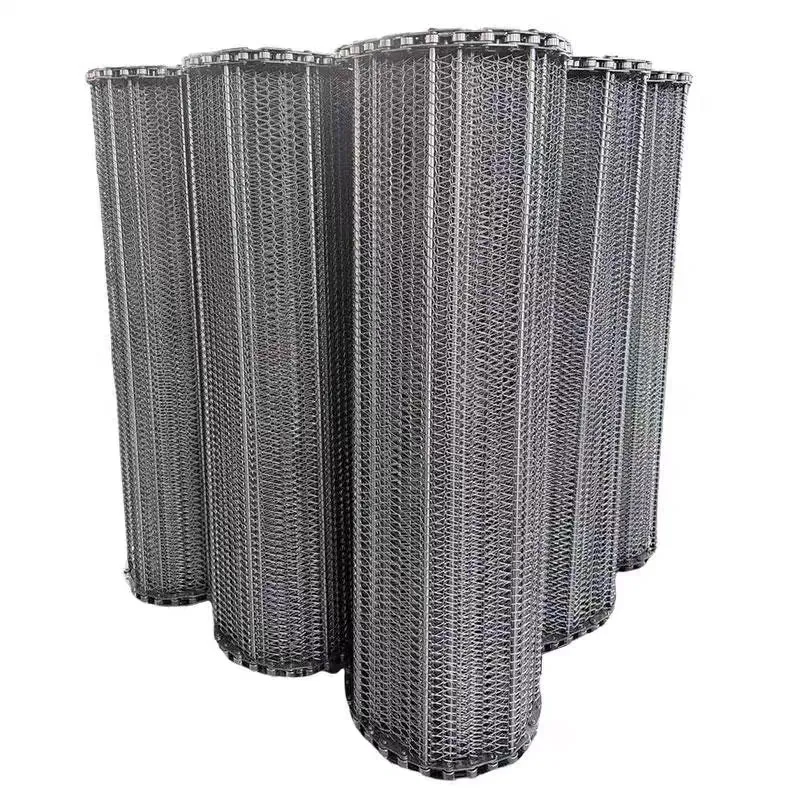
Product Application
Food Processing
Bakery ovens, fryer lines, freeze tunnels, and seafood processing.
Pharmaceuticals
Tablet coating, sterilization tunnels, and vial conveying systems.
Automotive
Paint shop drying lines, engine component assembly, and tire handling.
Electronics
PCB reflow ovens, lithium battery sintering, and semiconductor wafer transport.
Logistics
Parcel sorting, airport baggage handling, and warehouse automation.

Product application
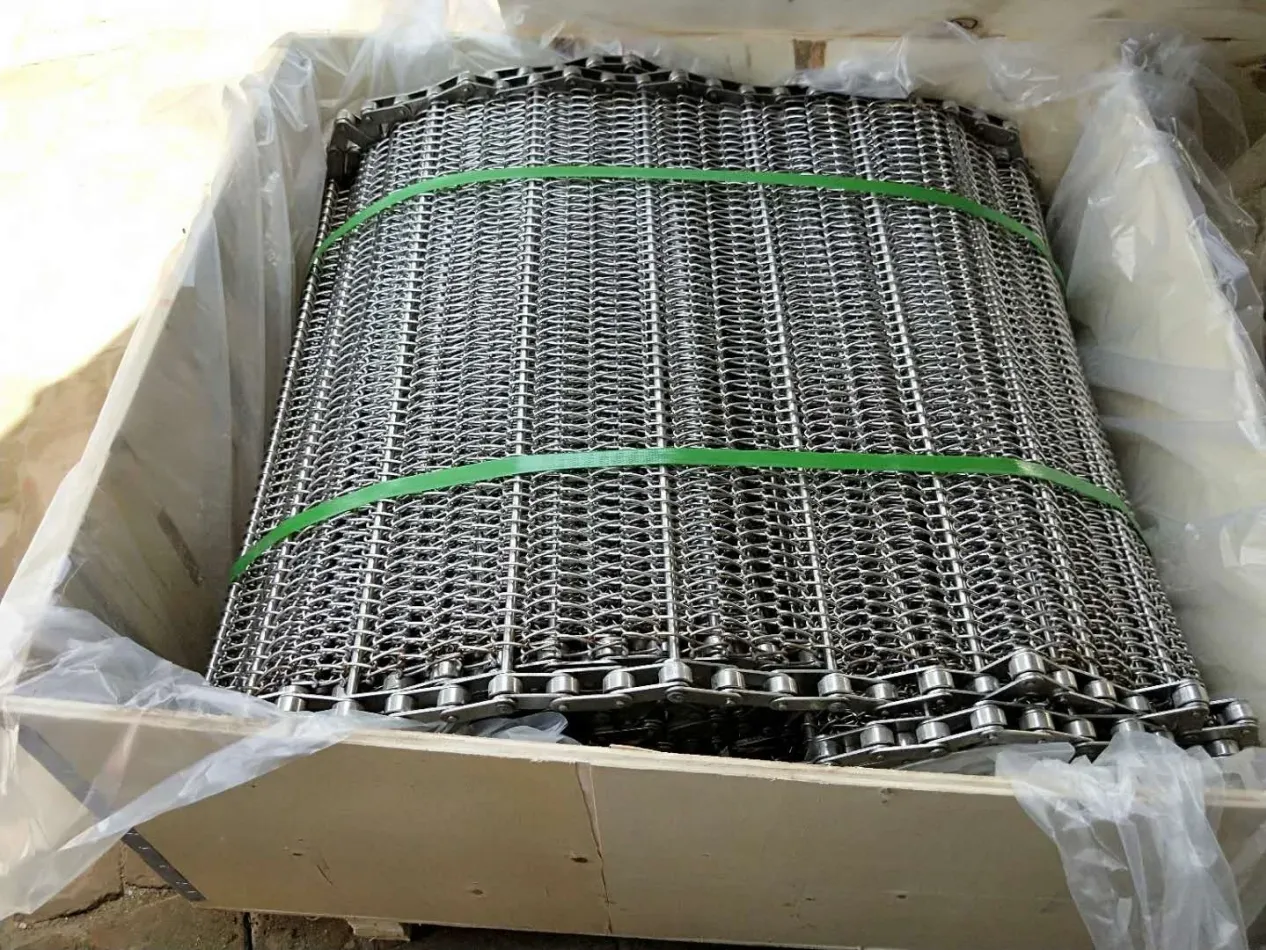
Product package
Selection Guide
1. Define Requirements
Material Properties: Weight, form (granular/bulk/liquid containers), and adhesion/stickiness.
Operating Environment: Temperature, humidity, and chemical exposure.
Special Requirements: Anti-static, magnetic-free, and cleanroom certification (ISO Class 1–8).
2. Recommended Solutions
Light-Duty Precision: Stainless steel flat-top chains (electronics).
High-Temperature: Inconel alloy mesh belts (heat treatment for aerospace components).
Heavy-Duty: Reinforced carbon steel plates with roller supports (mining).
Metal Conveyor Belt FAQ
What is a metal conveyor belt, and what are its advantages?
A metal conveyor belt is a continuous, moving conveying surface made from interlinked metal wires, rods, or mesh, used to transport materials or products. It provides excellent durability, heat resistance, and sanitation performance, making it suitable for demanding and high-temperature environments.
Which industries commonly use metal conveyor belts?
Metal conveyor belts are widely used in food processing, heat treatment, baking, glass manufacturing, pharmaceuticals, electronics, and industrial automation—particularly for processes that require high strength and cleanliness.
What types of metal conveyor belts are available?
Common options include wire mesh belts, balanced weave belts, chain-driven belts, flat flex belts, and plate link belts. Each type is designed for specific operating conditions such as load capacity, temperature, and product characteristics.
Can metal conveyor belts be customized?
Yes. We provide custom solutions based on your requirements, including belt width, pitch, material (such as stainless steel or carbon steel), edge type, and load capacity. Custom belts help ensure optimal performance for your production line.
How should a metal conveyor belt be maintained?
Routine inspection, cleaning, and correct tension adjustment help extend belt service life. Use suitable lubricants and remove debris to prevent wear. Stainless steel belts are easy to clean and typically require minimal maintenance.
Write your message here and send it to us
