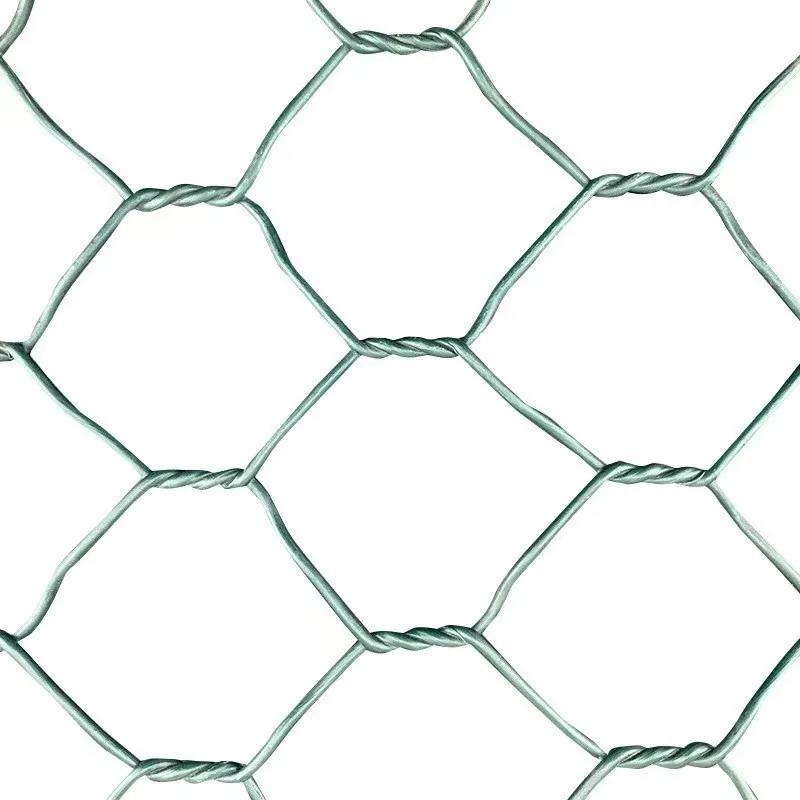

Gabion Net
Made from low-carbon steel wire, galvanized steel wire, plastic-coated steel wire, stainless steel wire, and zinc-aluminum alloy steel wire, this gabion net is formed as hexagonal or square mesh and can be supplied in shapes such as mesh sheets, cages, mesh pads, and mesh bags. It offers high strength and durability, good water permeability, flexibility and adaptability, environmental friendliness, and strong cost performance. Common applications include water conservancy engineering, traffic en
Product Description
Low-carbon steel wire: With high corrosion resistance, high strength, and good ductility, it is a commonly used material for gabions.
Galvanized steel wire: By galvanizing the surface of low-carbon steel wire, the corrosion resistance of the wire is improved. Depending on the galvanizing amount and process, different anti-corrosion effects are available, such as electro-galvanizing and hot-dip galvanizing.
Zinc-aluminum alloy steel wire: For example, zinc-5% aluminum mixed rare earth alloy wire and zinc-10% aluminum mixed rare earth alloy wire provide excellent corrosion protection and a long service life.
Stainless steel alloy wire: It is passive in the atmosphere and in corrosive media such as acids, alkalis, and salts, offering corrosion resistance without rusting. Its service life is several times that of conventional galvanized steel wire gabions.
Plastic-coated steel wire: Coating the steel wire with a protective layer of PVC and other plastics not only enhances anti-corrosion performance, but also enables the gabion mesh to blend with the surrounding environment through the selection of different colors.
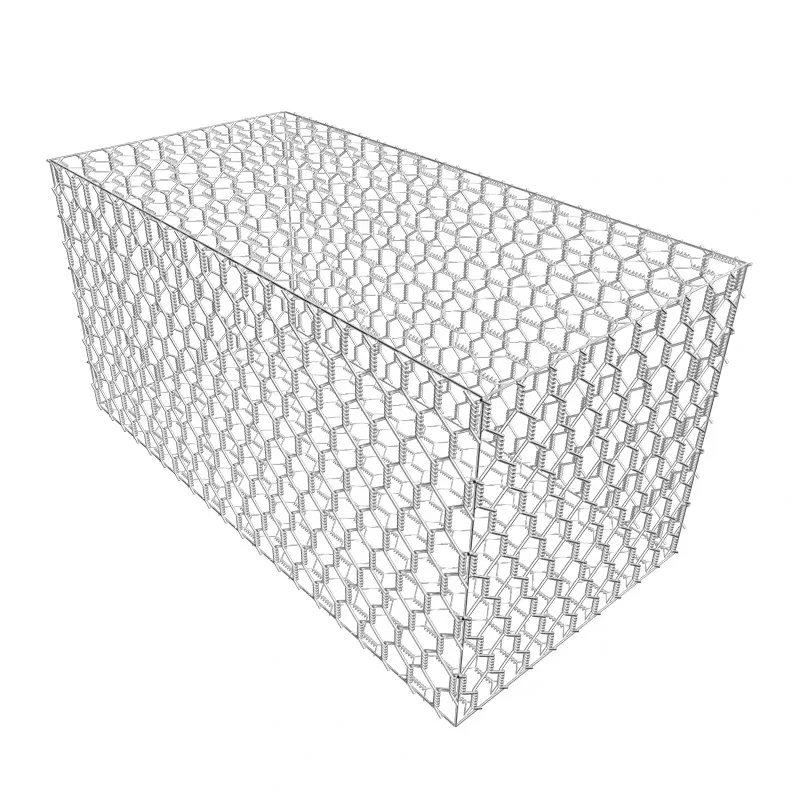
Structural forms: Mainly hexagonal mesh and square mesh. Common product formats include gabion cages, gabion bags, gabion mats, and more.
Wire diameter: The diameter of the mesh wire is generally between 2.0 mm and 4.0 mm. The edge wire is typically 0.5 mm to 1.0 mm thicker than the mesh wire, while the binding wire is generally smaller than the mesh wire. A common value is 2.2 mm.
Aperture: Various specifications are available, such as 60×80 mm, 80×100 mm, 100×120 mm, and 120×150 mm.
Overall size: Gabion cage lengths are generally 1 m to 6 m, widths are 0.5 m to 2 m, and heights are 0.15 m to 2 m.
Good flexibility: It can adapt to changes in slope and foundation settlement deformation, and can withstand foundation settlement deformation of ±15 cm. Compared with rigid structures, it provides improved safety and stability.
Strong anti-scour performance: It can withstand water flow speeds up to 6 m/s and effectively resists erosion of river banks and riverbeds caused by water flow.
Good water permeability: The structure supports natural groundwater functions and filtration. Suspended solids and silt can settle in the stone filling joints, reducing the buildup of hydrostatic pressure and helping prevent structural damage.
Strong durability: The use of highly corrosion-resistant materials and effective surface treatment technologies ensures a long service life. For example, the service life of zinc-aluminum alloy gabion mesh can reach 30 to 60 years.
Environmental protection and ecology: The stone-filled spaces in the gabion mesh support soil deposition and enable plant seeds to take root and germinate, achieving an organic balance between engineering protection and ecological greening.
Excellent cost efficiency: Installation is straightforward and does not require special technology or complex equipment. Simply place the stones into the cage and close/seal it, which helps reduce construction and labor costs.
Application areas
Water conservancy projects: Used for river management, bank protection, dam reinforcement, channel lining, and more, helping prevent water erosion and soil loss while protecting riverbeds and river banks.
Traffic engineering: In highway and railway construction, it is used for slope protection, subgrade reinforcement, bridge slope protection, and related applications to improve road and bridge stability and safety.
Mining engineering: It can be used for tailings dam construction in mines and for protecting waste-residue slope areas to prevent loss and collapse of tailings and waste residues, as well as to reduce environmental pollution.
Landscape engineering: It can be used to construct flower beds, flower ponds, landscape walls, ecological revetments, and other installations, providing a beautiful, natural, and practical material for landscape design.
Parameter | Specification | Description |
Mesh size (mm) | 60×80, 80×100, 100×120, 120×150 | Primarily rectangular openings (length × width); hole tolerance ±5% |
Wire diameter (mm) | 2.0~4.0 (including PVC coating) | Bare wire diameter: 1.8~3.8 mm; after plastic coating: 2.0~4.0 mm (PVC thickness 0.4~0.7 mm) |
Material | Hot-dip galvanized steel wire (Zn≥50 g/m²) | High corrosion resistance: galvanized or coating ≥200 g/m² |
Gabion cage size (m) | Length (1~6) × Width (1~2) × Height (0.15~1.0) | Can be customized; partition spacing ≤1 m reinforced structure |
Mesh tensile strength | ≥35~50 kN/m | Complies with EN 10223-3 |
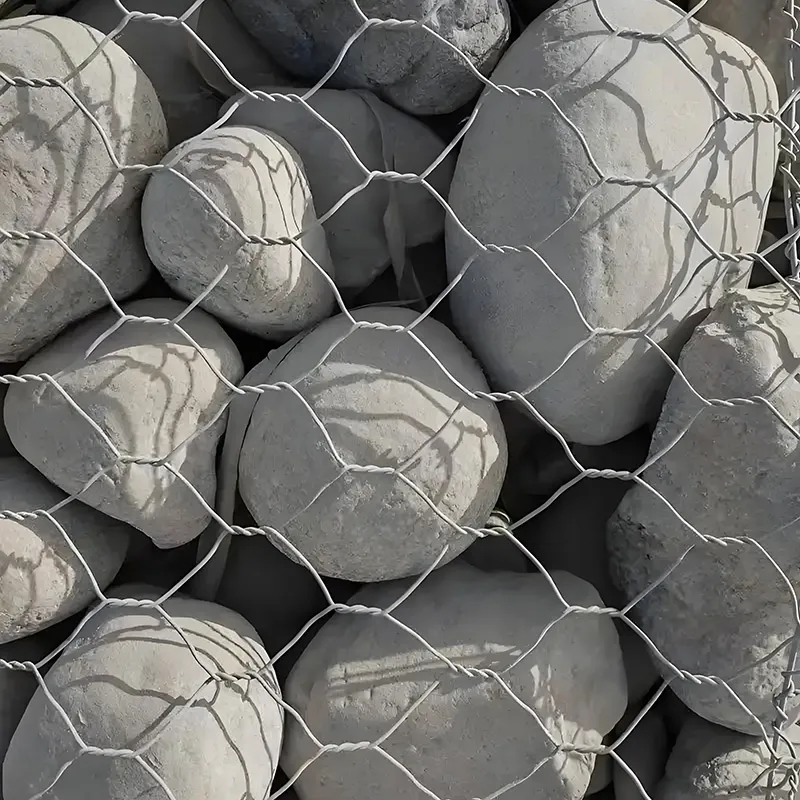
Filling stone particle size | 1.5~2 times the mesh size (e.g., 80 mm mesh with 120~160 mm stones) | Hard and weather-resistant (e.g., granite, pebbles, etc.) |
Connection method | Wire twisting or C-shaped buckle | Galvanized tie wire diameter ≥2.2 mm; spacing ≤150 mm |
Selection Suggestions
Product Features
Structural and material advantages
High strength and durability: Made from low-carbon steel wire, galvanized steel wire, zinc-aluminum alloy steel wire, and other high-quality materials. The mesh is braided or welded, providing high tensile strength and resistance to external impact. Surface treatments such as galvanizing and plastic coating significantly improve corrosion resistance. The service life can reach 30–60 years, and it can be used in a wide range of harsh environments.
Flexible structural design: The mesh is mainly hexagonal or square, offering a certain degree of elasticity. It can be adjusted flexibly to accommodate terrain settlement and slope deformation. It can absorb dynamic load energy such as earthquakes and water flows, helping avoid the risk of rigid structures becoming damaged.
Outstanding engineering performance
Excellent water permeability: The mesh structure allows water to pass through freely, reducing the accumulation of water pressure and helping prevent structural damage caused by poor drainage. It also supports groundwater circulation and natural soil ventilation.
Convenient and efficient installation: No complex equipment or high-tech work is required. Simply position the cages, mesh mats, etc., and then fill them with stones. The construction period is short, total cost is lower, and subsequent maintenance is simple.
Eco-friendly properties
Strong ecological compatibility: The spaces created by filled natural stones provide room for plant growth, allowing natural vegetation to establish. This enables the integration of engineering protection with ecological restoration while reducing environmental disturbance.
Sustainable and environmentally responsible materials: Using mainly natural stones and recyclable metal wire, without chemical pollution, it aligns with the concept of green engineering.
These characteristics enable gabion nets to be widely used in water conservancy, slope protection, transportation, landscape, and other fields. They help ensure project safety and stability while also supporting ecological harmony.
Product Application
Water conservancy projects
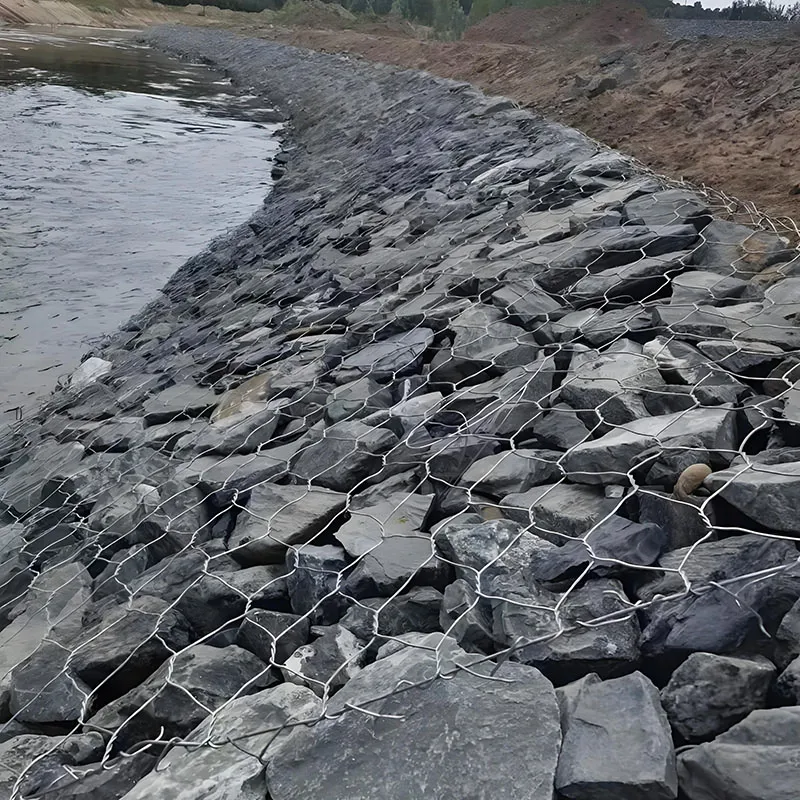
River management: Used for riverbank protection and riverbed paving to resist water erosion, prevent bank collapse and soil erosion, and maintain the river’s natural ecological cycle.
Dam reinforcement: Reinforces dam slopes to enhance impact resistance, addresses natural disasters such as floods, and protects dam safety.
Channel construction: As a channel lining material, it reduces erosion caused by water flow and improves water conveyance efficiency and channel service life.
Traffic engineering
Highway/railway slope protection: Install gabion nets on both sides of highway and railway slopes to prevent landslides and rockfalls and to ensure road safety.
Bridge pier protection: Place gabion nets around bridge piers to resist impacts from water flow, vessels, and other factors, helping protect the structural stability of the piers.
Subgrade reinforcement: Used to reinforce subgrade slopes to improve bearing capacity and reduce subgrade settlement and deformation.
Slope and geological disaster protection
Landslide prevention and control: Install gabion nets on mountain slopes prone to landslides to help fix the soil and rocks on the surface and prevent landslides.
Debris-flow control: Set up gabion net barriers in debris-flow-prone areas to block and divert debris flow and reduce damage to surrounding facilities.
Mine greening: Used for slope protection and ecological restoration after mining, providing a foundation for vegetation growth and improving the mine’s ecological environment.
Landscape and Municipal Engineering
Landscaping: Use gabion nets to create landscape walls, flower beds, rockeries, and more. Combined with stones and vegetation, they create a natural and rustic landscape effect, commonly used in parks, residential communities, and other locations.
Municipal protection: Use gabion nets to protect banks along urban rivers and lakes, supporting both protective functions and urban landscape beautification to improve overall urban environmental quality.
Fence construction: As a new type of fence material, gabion mesh is filled with stones to form a transparent and robust barrier that is both safe and visually attractive.
Other applications
Port wharf: Used for wharf shoreline wall protection, resisting wave and tidal impacts and protecting wharf structures.
Agricultural water conservancy: Used in farmland irrigation channels, reservoirs, and other facilities to prevent leakage and erosion, ensuring reliable agricultural water supply.
Product Application
Product Application
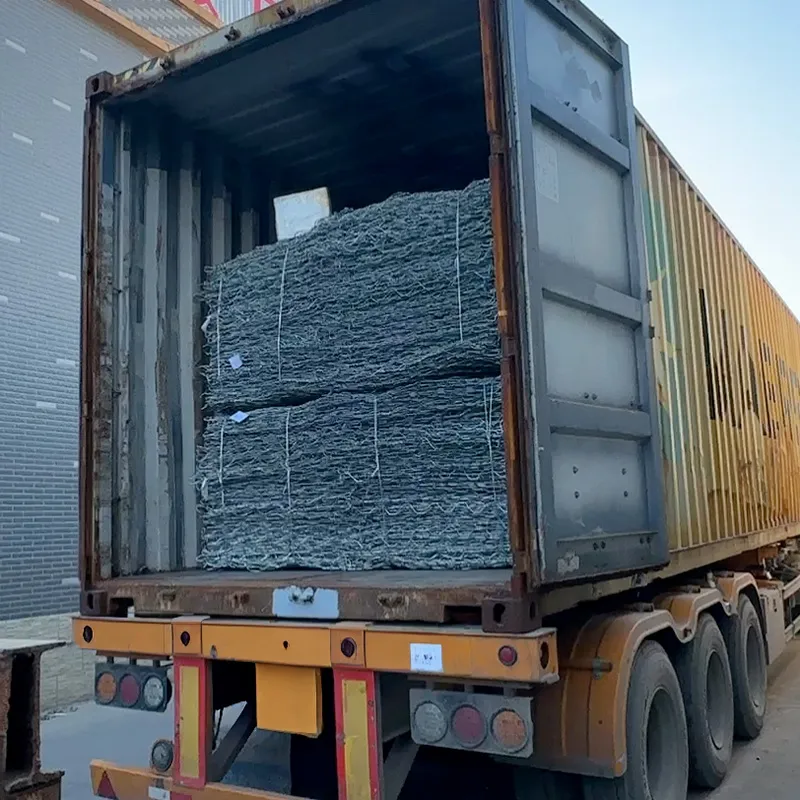
Product Package
FAQ
Are you a manufacturer or a trader?
We are a professional manufacturer of wire mesh products. Anping County Jinzehong Wire Mesh Products Co., Ltd. was established in 1968 and has grown into a comprehensive enterprise integrating production, R&D, and sales.
What can you purchase from us?
We supply stainless steel mesh, welded mesh, steel grating, woven mesh, guardrail mesh, zinc steel grid, perforated mesh, construction mesh, wire mesh, and more.
What is your delivery time?
We maintain sufficient inventory. The delivery time for stock materials is one week. For special customized products, the delivery time will be confirmed accurately based on quantity and technical requirements.
How do you ensure product quality?
We are committed to delivering products that meet the highest quality standards. Jinzehong Wire Mesh Products Co., Ltd. always follows the principle of quality-oriented and customer-oriented service. We ship goods only after strict quality inspection.
Can you provide samples?
Yes. We would be pleased to provide samples for your evaluation and testing.
Write your message here and send it to us
