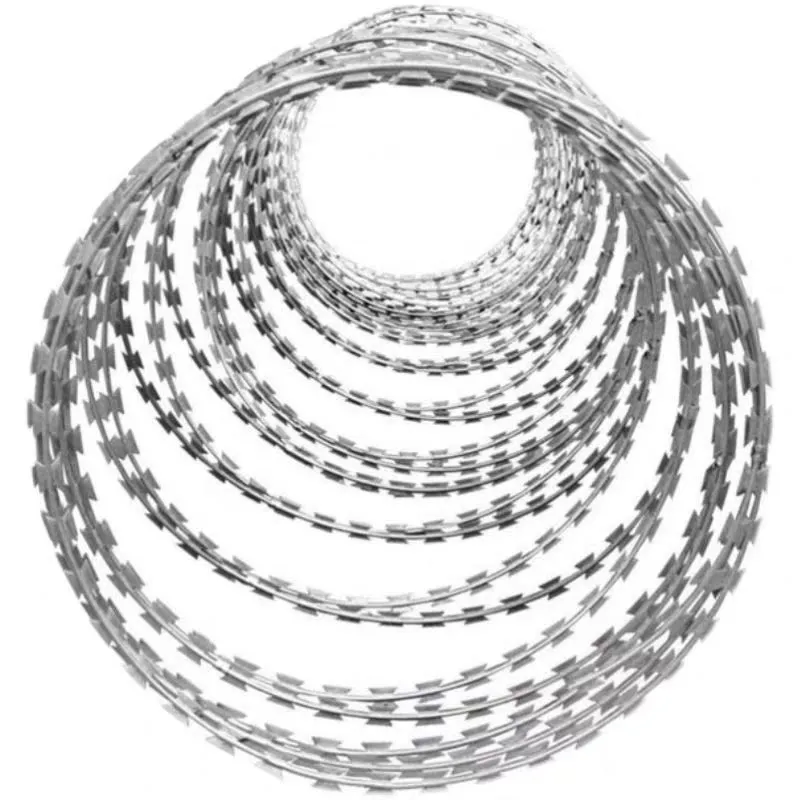

Barbed Wire
Razor wire with low-carbon steel wire or stainless-steel wire thorns, made for boundary isolation and intrusion prevention. Suitable for protecting high-risk areas.
Product Description
Razor wire is a protective security product made from high-strength metal wire (or composite materials) fitted with sharp barbs (blades, spikes, etc.). It helps prevent unauthorized intrusion, climbing, or vandalism by combining physical obstruction with visible deterrence.
Product Specification
Razor wire
Razor material | Hot-dip galvanized steel plate: thickness 0.4–0.6 mm; galvanizing amount ≥120 g/m² (ordinary zinc layer) or ≥245 g/m² (high zinc layer). - Stainless steel plate: commonly 304/316 stainless steel; thickness 0.5–0.8 mm; improved corrosion resistance. |
Core wire material | Hot-dip galvanized steel wire: diameter 2.5–3.0 mm; tensile strength ≥1200 MPa. - Stainless steel wire: diameter 2.0–2.8 mm; tensile strength ≥1600 MPa. |
Razor size | Length: 12 mm, 22 mm, 30 mm, 65 mm (common models include BTO-22, CBT-65). Width: 13–21 mm (blade lateral width after unfolding). |
Razor pitch | Reference / typical values: BTO-22 thorn distance 34 mm; BTO-30 thorn distance 50 mm; CBT-65 thorn distance 100 mm. |
Core diameter | 2.5 mm–3.0 mm |
Length of each roll | 10–25 meters (customizable). |
Weight | Approximately 10–20 kg/roll (depending on blade density and material type). |
Tensile strength | Core wire tensile strength ≥1200 MPa (galvanized steel wire) or ≥1600 MPa (stainless steel wire). |
Mounting bracket type | V-shaped bracket, Y-shaped column, spiral rolling cage (bellows shape). |
Fixed spacing | Brackets are spaced 1.5–3 meters apart, and the razor wire is installed horizontally or spirally wound. |
Iron barbed wire
Barbed material | Galvanized steel or cast iron. |
Core wire material | Low carbon steel wire. |
Barb size | Thorn length: 20–50 mm (square or triangular spikes). Thorn distance: 50–150 mm (distance between spikes). |
Length of each roll | 20 m–50 m (customizable). |
Weight | Approximately 5–15 kg/roll (depending on nail density). |
Tensile strength | Main wire tensile strength ≥380 MPa (low carbon steel wire). |
Product Features
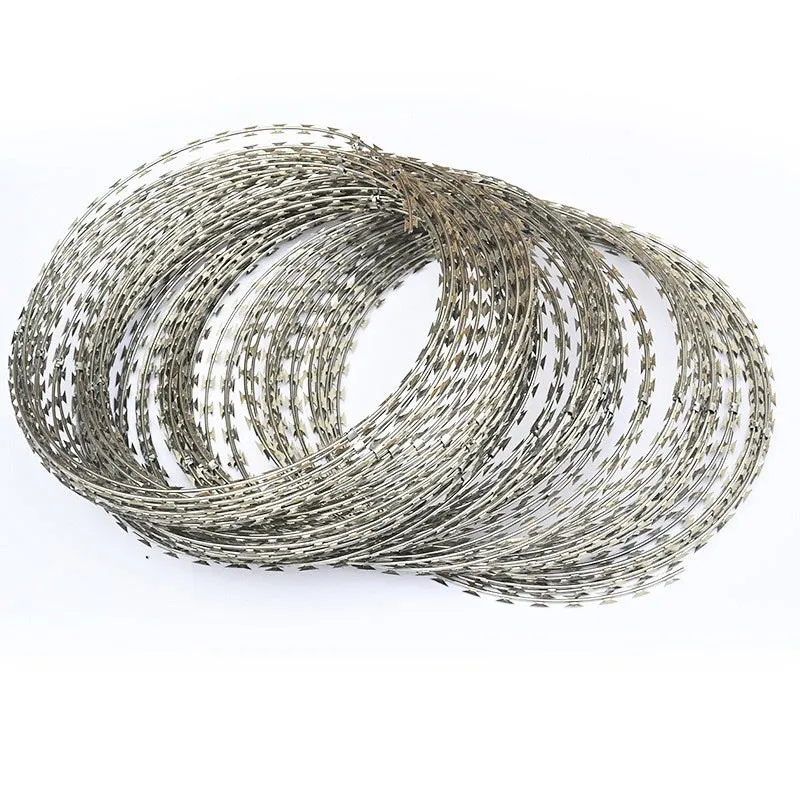
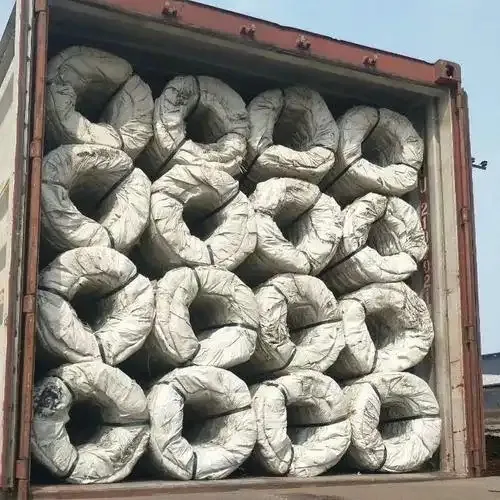
Product package
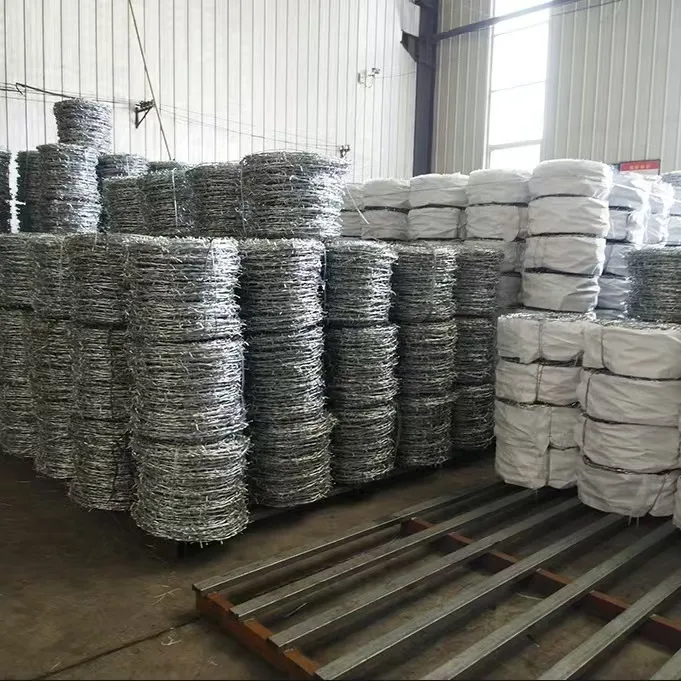
Our stock
Barbed Wire FAQ
What is barbed wire?
Barbed wire is a type of fencing wire constructed with sharp edges or points arranged at intervals along the strands. It is primarily used to create cost-effective security fences that deter unauthorized access or help contain livestock.
What materials are used to produce barbed wire?
Barbed wire is typically made from galvanized steel wire or stainless steel to ensure durability and rust resistance. It can be single- or double-strand, with barbs twisted or crimped around the main wire.
What are the common applications of barbed wire?
Barbed wire is widely used in agriculture (to fence livestock), perimeter security (on walls or fences), military zones, construction sites, and restricted areas. It serves as both a physical barrier and a psychological deterrent.
What types of barbed wire are available?
We offer standard twist, reverse twist, and concertina (razor wire coil) types. Barb spacing and length can vary depending on security requirements. Custom coil diameter, wire thickness, and barb configurations are also available.
Is barbed wire easy to install and maintain?
Yes. Barbed wire is lightweight, easy to install on posts or on top of fences, and requires minimal maintenance. Regular inspections are recommended to ensure tension and safety in high-use areas.
How to Choose the Right Barbed Wire for Different Fencing Applications
Selecting the right barbed wire depends on the animals you need to contain, the required security level, and the environmental conditions. Different applications call for different wire gauges, barb spacing, tensile strength, and protective coatings.
For barbed wire for cattle, a traditional two-strand galvanized barbed wire with moderate barb spacing provides reliable livestock control while minimizing unnecessary injury. Farms with large grazing areas often prefer high-tensile wire because it typically requires fewer posts and maintains tension over longer distances.
When selecting barbed wire for pigs, closer barb spacing is recommended because pigs are more likely to push against fences. A stronger wire with excellent corrosion resistance helps extend service life in muddy environments.
For residential or agricultural properties, barbed wire for garden fencing is commonly installed along the outer perimeter to discourage trespassing and help protect crops from wildlife. In these applications, lighter gauges may be sufficient while still maintaining a neat appearance.
Many industrial facilities also install barbed wire on top of existing fences to increase perimeter security without replacing the current system. It can be mounted above chain-link fences, welded mesh fences, or steel palisade fencing to create an effective physical deterrent.
At Jinzehong, we manufacture barbed wire in multiple wire diameters, barb spacings, coating options, and packaging styles, enabling customers to choose the best solution for farms, industrial sites, infrastructure projects, and commercial security applications.
Barbed Wire Pricing: What Affects the Total Cost?
When sourcing barbed wire, many buyers focus on the unit price. However, the final cost depends on a combination of material specifications, manufacturing standards, packaging, and shipping rather than on length alone.
Material selection is one of the most important pricing factors. Hot-dip galvanized steel is widely preferred because it offers an excellent balance between durability and affordability. Stainless steel provides superior corrosion resistance for harsh environments, while mild steel is often selected for temporary or budget-sensitive projects. Different materials naturally result in different pricing levels and expected service life.
Wire diameter and barb spacing also affect production costs. Heavier-gauge wire contains more steel and provides greater tensile strength, making it suitable for demanding agricultural and security applications. Similarly, tighter barb spacing or customized designs may require additional processing, which can influence the overall quotation.
Packaging and order volume should also be considered. Export coils, palletized loading, private labeling, and custom roll weights all contribute to the final price. Large-volume orders often benefit from improved production efficiency and lower unit costs.
Freight is another key cost component, especially for international shipments. Transportation expenses vary by destination, shipping method, and container utilization, so they should be assessed together with the product price.
Instead of comparing quotations solely on cost per meter or per kilogram, experienced buyers evaluate the total value of the product, including corrosion resistance, installation efficiency, maintenance requirements, and long-term service life.
As a professional manufacturer, Jinzehong provides customized quotations based on your required specifications, coating type, roll weight, order quantity, and delivery destination. This helps customers select the most cost-effective solution while ensuring reliable quality and long-term performance.
Galvanized, Stainless Steel, Aluminum or Mild Steel: Which Barbed Wire Is Best?
Barbed wire is available in several materials, each designed for different operating environments and performance requirements.
Mild steel barbed wire is commonly used for temporary fencing and general agricultural applications. It offers a cost-effective solution where long-term corrosion resistance is not the primary concern.
Galvanized steel barbed wire remains the most popular choice worldwide because it combines excellent mechanical strength with reliable rust protection. Depending on zinc coating thickness, galvanized wire can provide many years of consistent outdoor performance in rural, industrial, and commercial environments.
For coastal regions, chemical plants, and high-humidity environments, stainless steel barbed wire offers superior corrosion resistance. While the initial investment is higher than galvanized products, the extended service life often reduces total maintenance costs over time.
Some projects also specify aluminum barbed wire due to its lightweight characteristics and natural corrosion resistance. Aluminum wire is easier to transport and install while delivering reliable performance under specific environmental conditions.
Terms such as iron barbed wire or barbed iron wire are commonly used in international markets; however, most modern products are manufactured using carbon steel wire with protective coatings rather than pure iron.
Jinzehong provides a full range of steel barbed wire solutions, including hot-dip galvanized, electro-galvanized, stainless steel, and customized material options, ensuring customers can select the most suitable product for their climate, budget, and application needs.
Why Global Buyers Choose Jinzehong as Their Barbed Wire Manufacturer
Choosing the right barbed wire manufacturer is as important as choosing the right product. A reliable supplier ensures consistent quality, stable delivery schedules, and professional technical support throughout the purchasing process.
As an experienced barbed wire manufacturer, Jinzehong serves distributors, wholesalers, construction contractors, agricultural suppliers, and government projects across numerous international markets. Our manufacturing facilities are equipped with modern production lines capable of producing various wire diameters, barb spacings, zinc coatings, and roll sizes according to customer specifications.
For customers looking for barbed wire at competitive prices, cost advantages are achieved through efficient production management without compromising material quality. Every production batch undergoes strict quality inspection to ensure dimensional accuracy, tensile strength, and coating consistency.
Jinzehong also provides custom barbed wire fencing solutions for projects requiring unique wire gauges, packaging, private labeling, or special export standards. OEM and ODM services are available for distributors seeking to expand their own product brands.
As a trusted barbed wire supplier, we support customers with technical documentation, export packaging, container loading optimization, and responsive after-sales service. Whether your project involves agricultural fencing, industrial security, infrastructure protection, or commercial perimeter barriers, our team can recommend the most suitable solution based on your application and budget.
Working directly with a professional manufacturer reduces sourcing risks while ensuring reliable product quality, stable supply capacity, and long-term business cooperation.
Why Global Buyers Choose Jinzehong as Their Barbed Wire Manufacturer
Selecting the right barbed wire manufacturer is just as important as choosing the right product. A reliable supplier ensures consistent quality, stable delivery schedules, and professional technical support throughout the purchasing process.
As an experienced barbed wire company, Jinzehong serves distributors, wholesalers, construction contractors, agricultural suppliers, and government projects in numerous international markets. Our manufacturing facilities are equipped with modern production lines capable of producing various wire diameters, barb spacings, zinc coatings, and roll sizes according to customer specifications.
For customers seeking barbed wire at competitive prices, cost effectiveness is achieved through efficient production management without compromising material quality. Every production batch undergoes strict quality inspection to ensure dimensional accuracy, tensile strength, and coating consistency.
Jinzehong also provides custom barbed wire fencing solutions for projects requiring unique wire gauges, packaging, private labeling, or special export standards. OEM and ODM services are available for distributors looking to expand their own product brands.
As a trusted barbed wire supplier, we support customers with technical documentation, export packaging, container loading optimization, and responsive after-sales service. Whether your project involves agricultural fencing, industrial security, infrastructure protection, or commercial perimeter barriers, our team can recommend the most suitable solution based on your application and budget.
Working directly with a professional manufacturer reduces sourcing risks while ensuring reliable product quality, stable supply capacity, and long-term business cooperation.
Write your message here and send it to us
